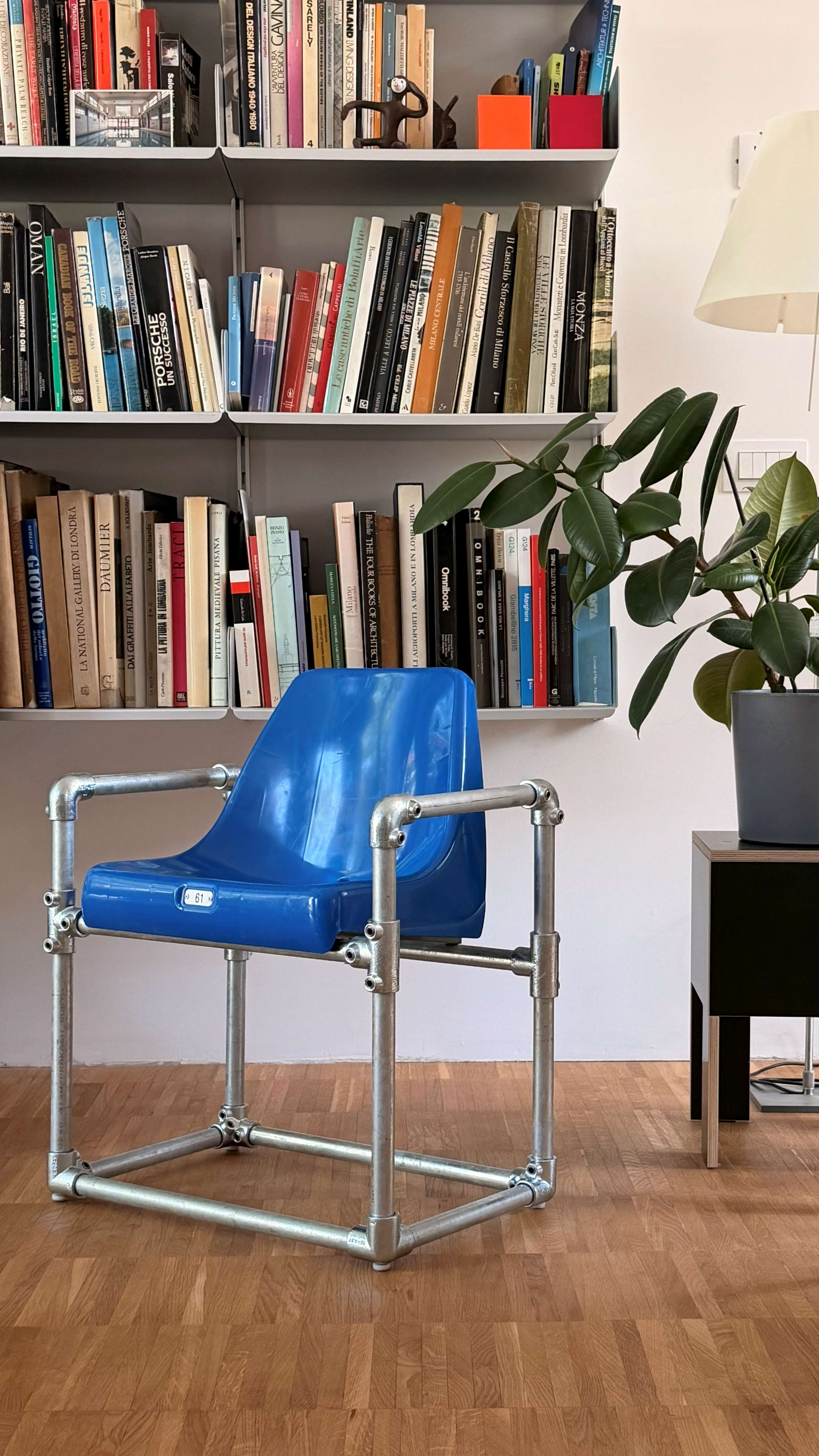

When Filippo Brambilla walked towards the Sinigaglia Stadium to retrieve one of the old seats from the Curva Ovest after it had been dismantled, he had no intention of taking home a trophy. He did not want to leave a symbol of Como’s history gathering dust on a shelf, nor use it as the usual excuse to take friends on a trip down memory lane over dinner. He simply wanted to find a direct, tangible way to prevent a piece of his city’s history from ending up in a landfill.
"When they dismantled the stand, I absolutely wanted to take one," says Filippo, an architect in Como who has always moved between football, design and photography. "I really liked the idea of saving a fragment of the stadium, but a second later I asked myself: how can I make sure it keeps living, without turning it into the usual dusty piece of memorabilia behind glass?"
That question became the starting point for POSTO. The project emerged completely spontaneously, developing slowly through ideas sketched in a notebook, hours spent at the workbench, unsuccessful attempts and the first prototypes adjusted by hand in the workshop. It reflects the perspective of someone who, both professionally and instinctively, is used to finding beauty in objects that others might see as purely functional.
"I’m talking about things that were created first and foremost to serve a practical purpose, but in which you can always discover and bring out an aesthetic and design value."
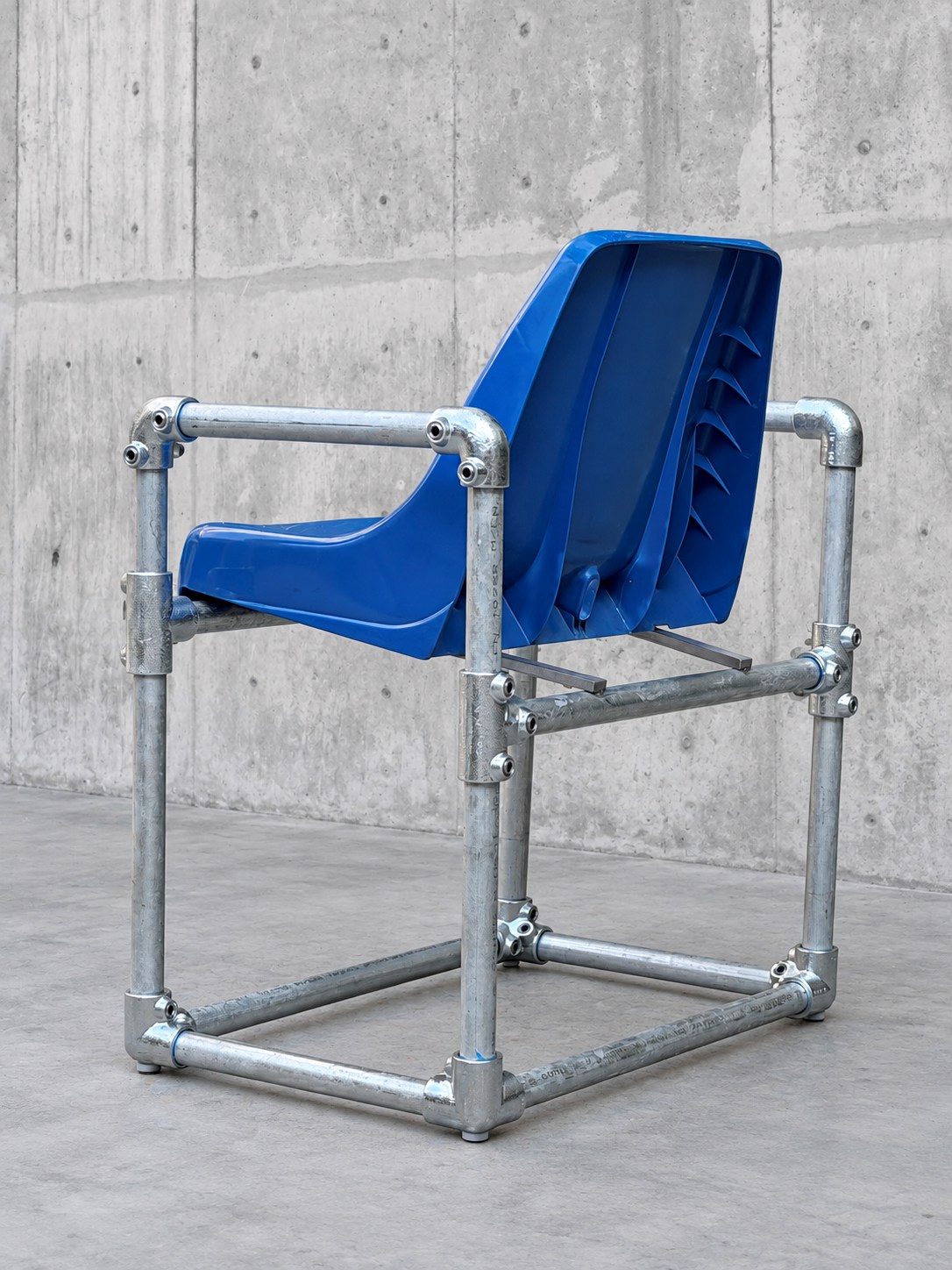
To build the frame supporting the seat, Filippo deliberately avoided anything overly polished or decorative. Instead, he drew directly from the raw visual language of the structure the seat originally belonged to, using a system of metal tubes and joints similar to those found in scaffolding used for stands and construction sites.
The result is a solid, technical structure that immediately reveals the origins of that piece of the Curva. The concept also proved highly versatile: the frame became a modular system that allows several seats to be placed side by side, creating one-, two- or three-seat configurations suitable for a home, a bar, a restaurant or an office.
But beyond the metal tubes and the work carried out in the workshop, the real value of POSTO lies in one simple idea: a place is never lost; it simply changes form.
"At the stadium, a seat is an essential object, almost cold and completely anonymous when you see hundreds of them repeated along the stand," Filippo explains. "But for someone who has sat there for years, that piece of plastic ends up carrying an incredible number of memories: the first match you watched as a child with your father, a crazy goal scored in the 90th minute, a promotion celebrated in the pouring rain, the faces and voices of the people you shared that small part of the stand with season after season."
Once removed from the concrete steps of the Sinigaglia and placed inside its new metal frame, the seat immediately loses its serial nature. It takes on a story of its own and becomes a unique object, with its plastic slightly faded by sun and weather, its seat number still visible on the surface and the permanent marks left by time and by the celebrations of supporters.
Anyone who has spent even a single match in that stand can immediately recognise something of their own in it.
POSTO quickly connected with supporters and with people who love Como, showing how ideas with the greatest impact often begin with the simplest and most genuine intuitions.
Its first life in the Curva Ovest may have come to an end, but the seat has never stopped being what it always was: a POSTO, a place for someone to sit.
It simply does so somewhere else now, in a new form, with many more stories still to come.