
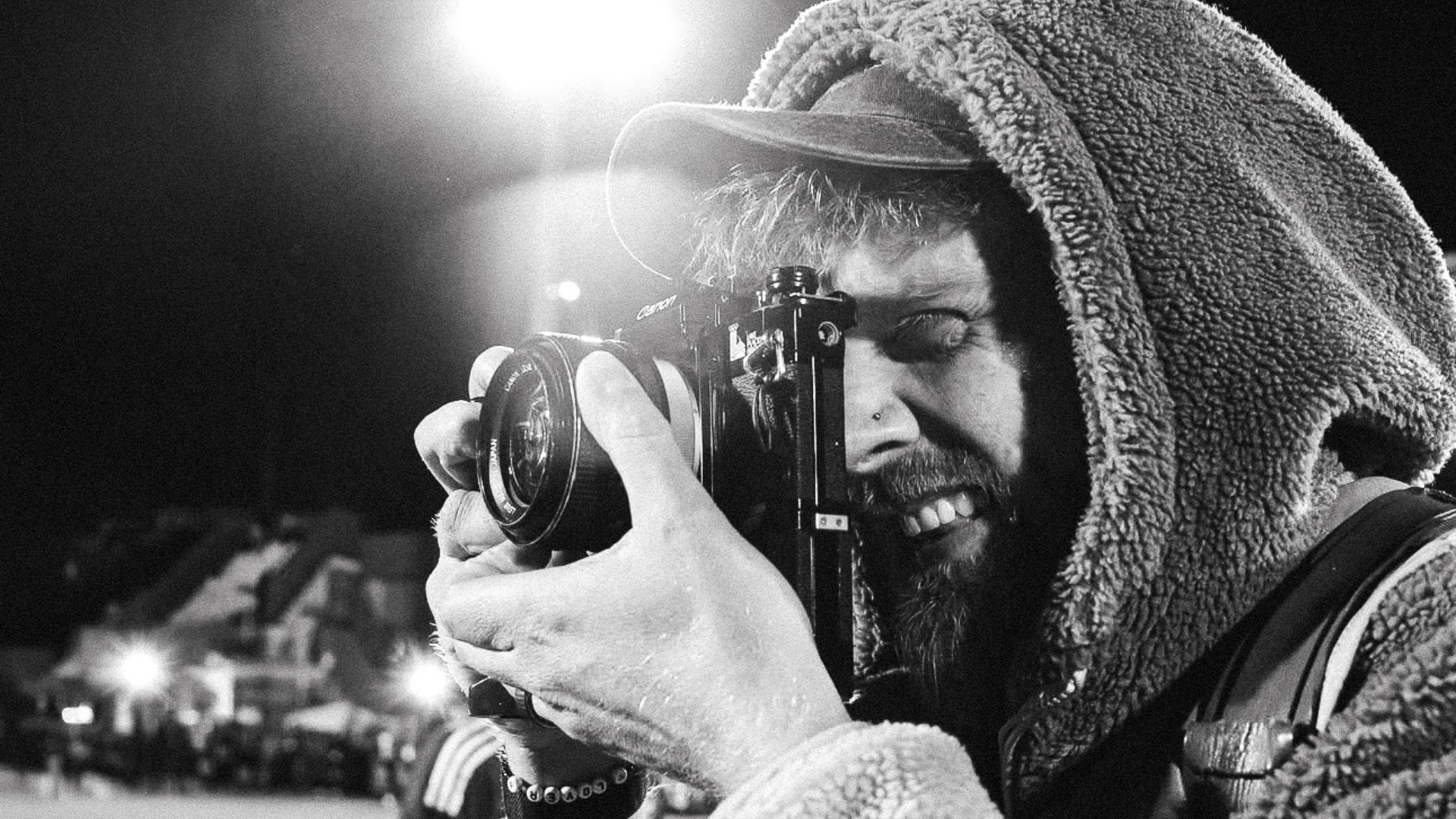
For most photographers, football moves too fast. The sprint, the tackle, the goal, the celebration, the instant edit, the upload, the algorithm. Everything is designed to happen now. Miles Myerscough Harris has built a career by doing almost the opposite.
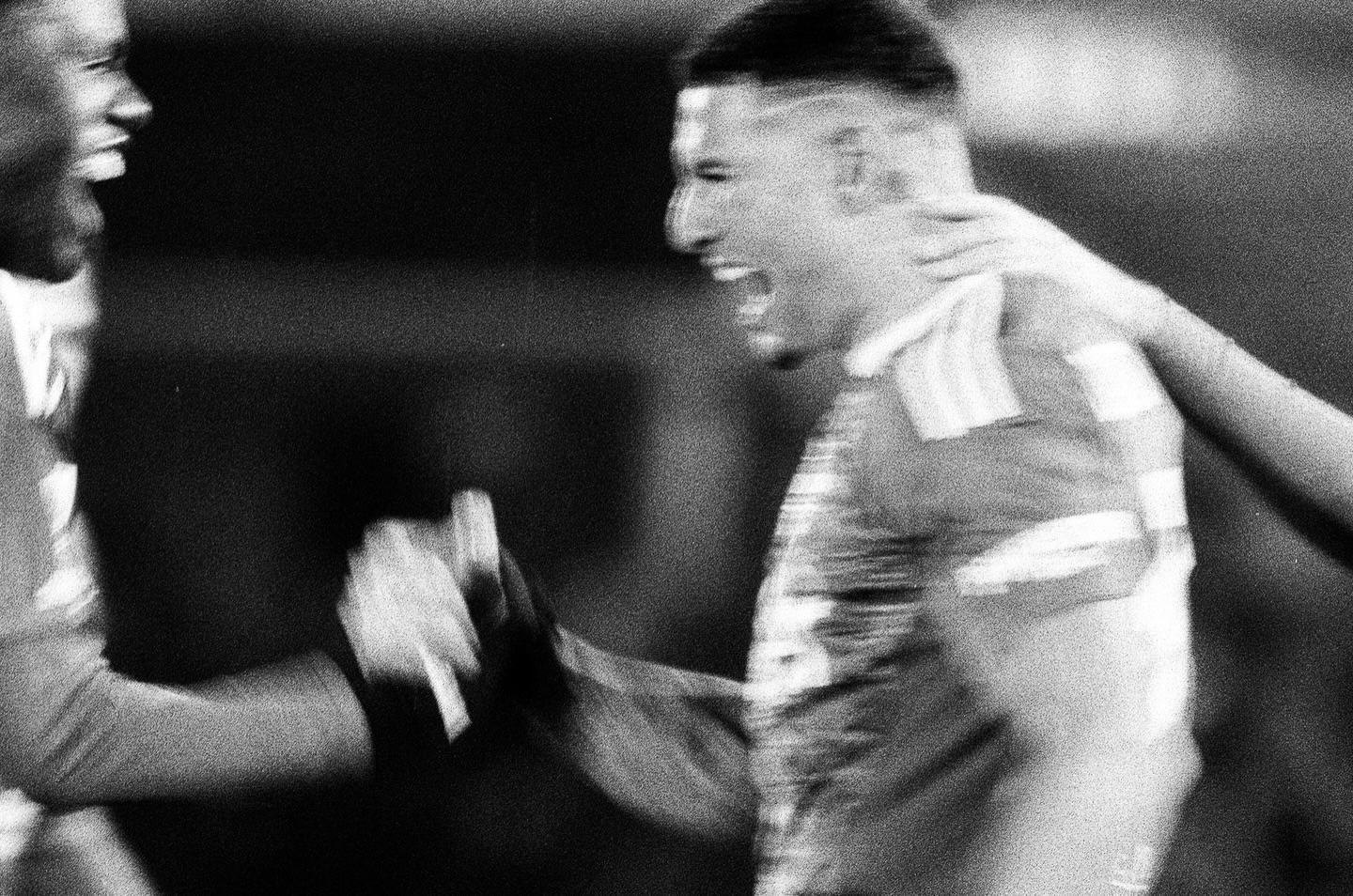
Through Expired Film Club, his online world of vintage cameras, old rolls of film and sport seen through a softer grain, Miles has become one of the most distinctive image makers working in football today. His photos feel less like documentation and more like memory. Players blur at the edge of the frame. Floodlights glow. Crowds become texture. A goal celebration looks like something you half remember from childhood, even if it happened last week.
“I’m as surprised as anybody, honestly,” he says. “I’m very lucky. Completely living the dream. I love what I do so much and it never gets old, turning up to these amazing stadiums and shooting it.”
Like many good modern stories, it began by accident. Before Expired Film Club, Miles worked in the music industry, mostly across digital, photography, videography and audio. Then lockdown arrived in the UK, live music stopped, and he found himself with time. He bought an old film camera on Facebook Marketplace in Oxfordshire and started experimenting again with a medium he had not properly touched since school.
“I just fell completely in love with shooting film basically, and using these old cameras and old rolls of film,” he says. “I started posting my journey back into film photography.”
The name came naturally. He liked expired film, the strange suspense of it, the fact that no roll could promise exactly what it would give back. Then one TikTok changed everything. On the coast in the south of England, he asked his wife to film him loading an expired roll into an old camera. He posted it as a point of view video. Overnight, it reached millions.
At first, he repeated the format wherever he could, in parks, woods and quiet corners while stadiums were still closed. Then sport returned, and with it came the place where his style made complete sense. Football, seen on film, suddenly looked less like content and more like cinema.
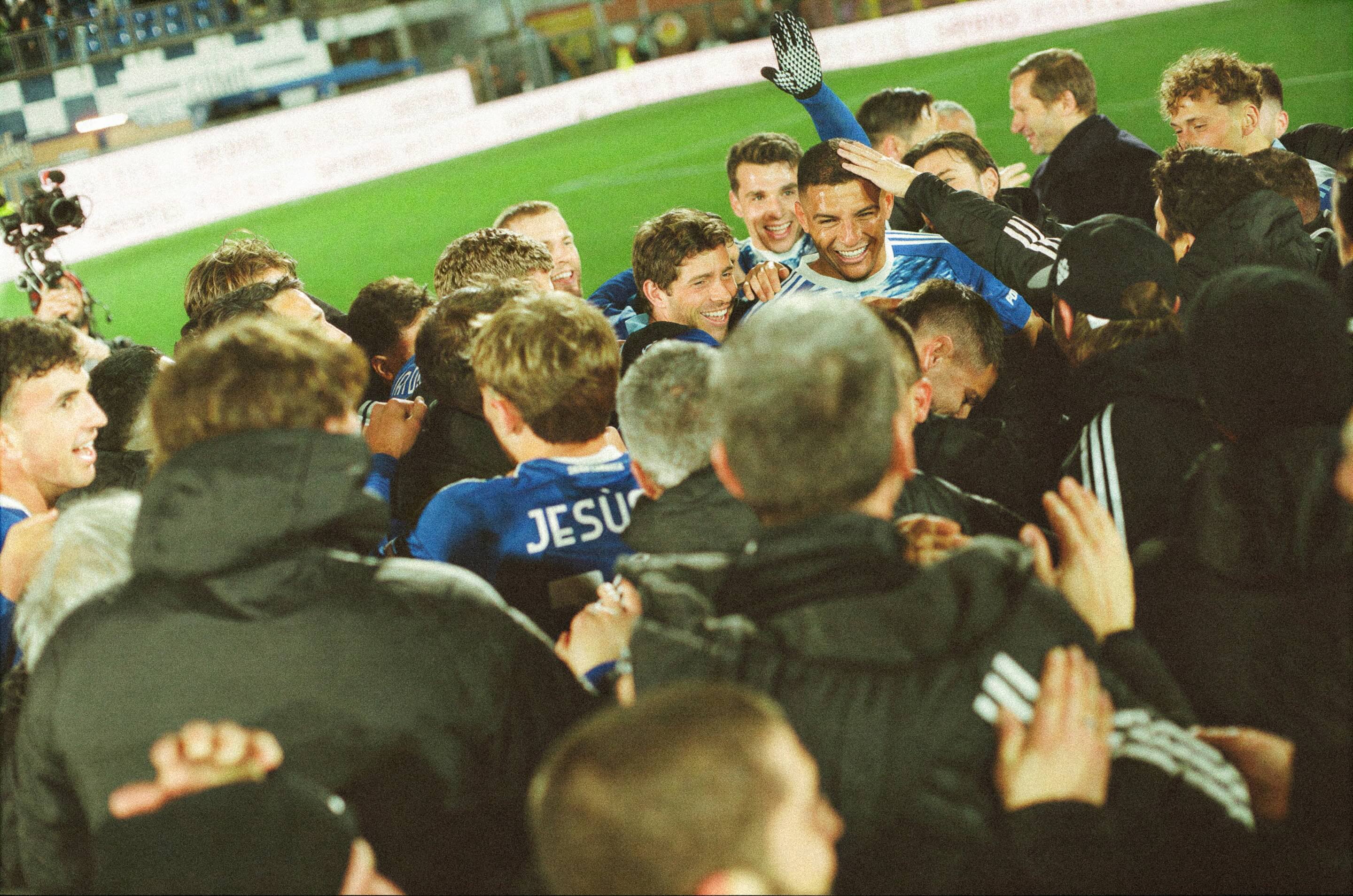
The first major shift came through COPA90, who sent him and his brother to shoot Fulham against Nottingham Forest from the stands. Fulham reposted the work, a dialogue opened, and by November 2023 he was pitch side at Craven Cottage for Fulham against Wolves. “That was the first time I was a proper pitch side accredited photographer for a game,” he says. “I’ll never forget it.”
The video from that match exploded. Clubs noticed. Other sports noticed. The New York Yankees got in touch. Six Nations rugby followed. Then came the FA Cup quarter final between Manchester United and Liverpool, where Amad scored deep in extra time and Miles, a United fan, found himself photographing and losing his mind at the same time. Manchester United shared the video. Another door opened.
Como, though, offered something different. When Miles finally arrived at Stadio Giuseppe Sinigaglia, after an earlier attempt was interrupted by that same United match, it was his first time in the city. The setting immediately made sense to him.
“Como was a dream to shoot because it’s so gorgeous,” he says. “Everywhere I looked, basically, there was cool stuff to photograph.”
His approach is not to compete with the digital photographers beside him, who are sending images out in real time. By the time his film comes back from the lab, the obvious pictures have already been seen. So he looks elsewhere. A different frame. A quieter emotion. A shape in the crowd. A player in the seconds after the moment everyone else captured.
“I try to treat it in my head as making each frame like a cinematic story of the place,” he says. “I like to pick out other little details of games that people might not see in the news stories or on social media.”
At Como, that meant the football, but also the lake, the streets, the feeling around the stadium, the way matchday sits inside the city rather than outside it. It meant the intimacy of the ground, the ultras behind the goal, the flags, the closeness, the late winning goal from Assane Diao that sent him running past Miles and his 1980 Canon.
“One of those photos of him celebrating is one of my favourites I’ve ever taken,” he says.
Away from the pitch, he and his wife explored the city and the lake by car, stopping for views, coffee and the kind of alfresco moments that make Italy feel naturally cinematic. The night of the match, they found a late table, sat outside by heaters, ordered pizza and red wine, and let the evening slow down.
That sense of slowness is the point. In a sports culture obsessed with speed, Miles works with delay. After a match, he may leave with 15 to 20 rolls of film. They go back to Analogue Wonderland, his local lab, where they are developed, scanned and sent back. Only then does he see what he has.
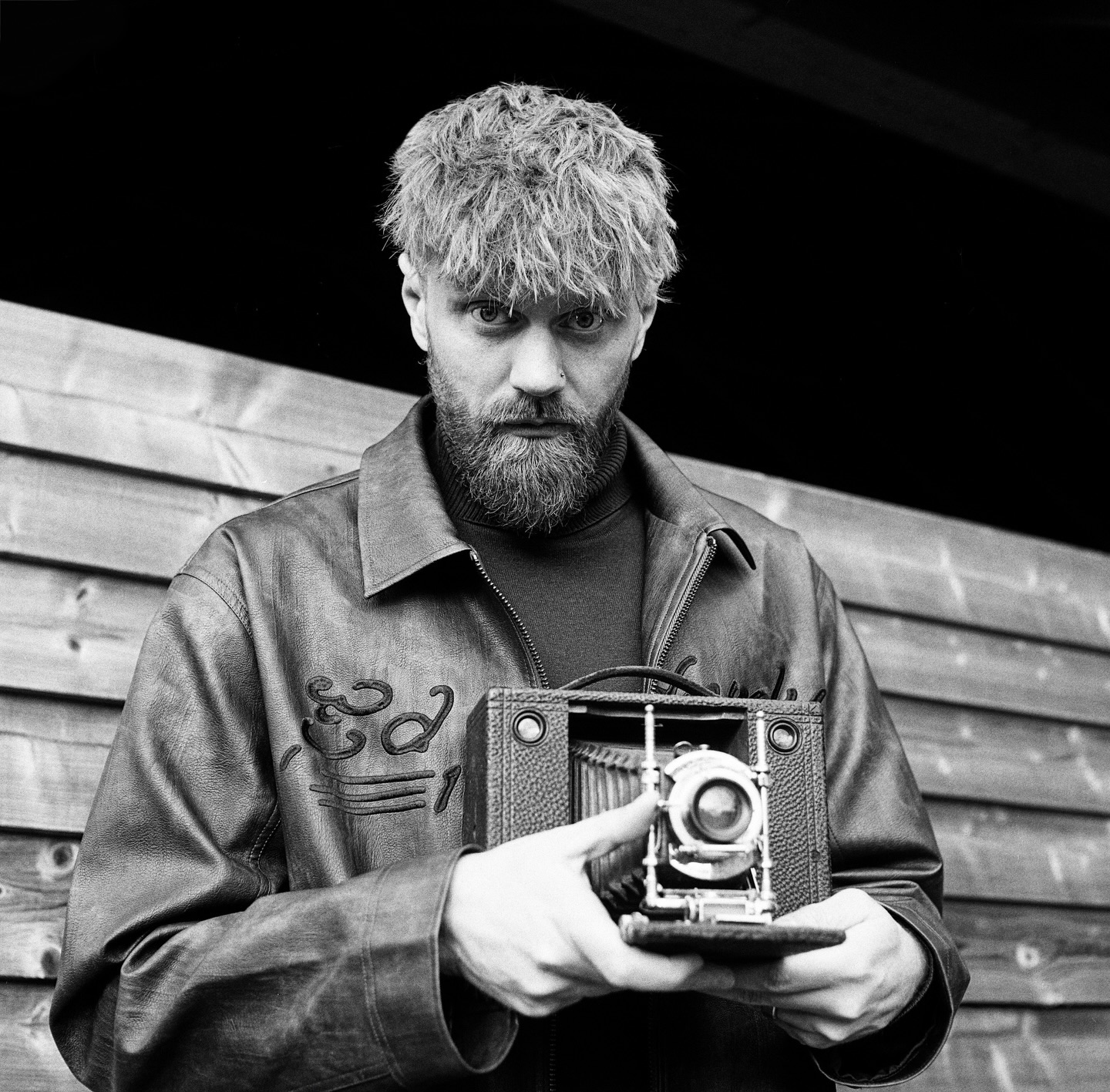
“There’s a certain beauty in those imperfections,” he says. “Film just looks like film anyway, so there’s not a lot I need to do.”
His garage is now full of negatives. Some will become prints. Some will go into a photo book. Some may simply stay as evidence of a life spent moving through stadiums, cities and small private moments with a camera in hand.
For all the reach, the viral clips and the access, Miles still talks about the work like someone who cannot quite believe he gets to do it. He wants to shoot sports in Japan. He wants to photograph Manchester United winning the Champions League or England winning the World Cup. But mostly, he wants to keep going.
“Sometimes I’m shooting football in Como,” he says. “Sometimes I’m shooting a historic Grand Prix in Monaco. Sometimes I’m climbing a mountain in Maine and shooting film at the top. I just love experiencing it all.”