FOOTBALL
The Big Interview – Sergi Roberto


Sergi Roberto on leaving Barcelona, the PSG comeback he still replays, the people he calls after full time, and why Como feels strongest when the whole club moves like a family.
Sergi Roberto has been at Como since 23 August 2024, long enough for the conversation to move past arrival narratives and onto something more revealing. Not what he is leaving behind, but what he actually is once the noise settles. What habits remain. What values do not shift. What kind of senior player he chooses to be in a new environment.
At Barcelona, he became a trusted solution to problems rather than a fixed role. Midfield when control was needed. Right back when balance mattered. A player who could absorb change without making the change about him. Barcelona’s own goodbye note did not lean on romance. It leaned on longevity, appearances, trophies, and the simple fact that he had been part of that club for most of his life.
BLU talked to him what it felt like to step outside that Barcelona bubble for the first time.
“Honestly, leaving Barça was very sad. Barça is the team of my life. I have been a Barça fan since I was a little kid and I played my whole life there. At first it was very sad, but at the same time I felt proud of the career I had in Barcelona and all the titles I was able to win. And I also felt that I wanted to try another experience.”
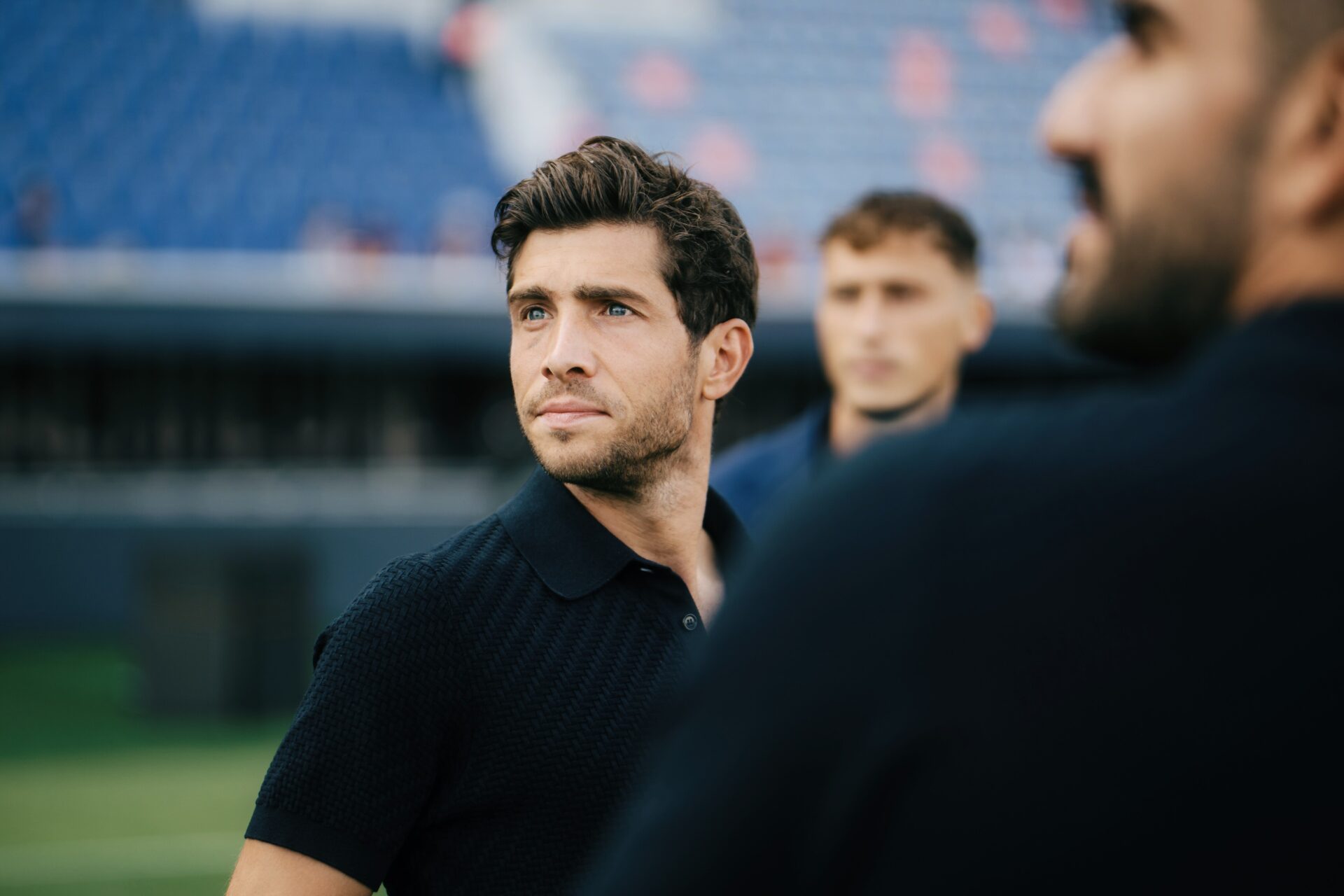
If most players have one clip that follows them, Roberto’s is unavoidable. The comeback against Paris Saint Germain in March 2017, the last goal in the 95th minute, the stadium tipping into disbelief. It is the kind of moment that turns a squad player into a permanent reference point.
When you ask for a small memory that did not make the broadcast, he does not reach for a clever detail. He reaches for the hours afterwards, when the adrenaline will not let you down.
“The comeback against Paris Saint Germain was an incredible night. I remember the moment of the goal. The whole stadium went crazy, all my teammates went crazy. It was a party that lasted for weeks. That night, after the match, it was impossible to sleep because I was watching the goal on repeat all night long.”
It is an intimate image, and it matches the public version of him. Not a man chasing attention, but someone who feels things deeply and then files them away quietly.
Away from football, he is strikingly normal. A rare date night with his wife, no football, no kids, is not presented as a lifestyle flex. It is an aperitivo, dinner, good wine, maybe cinema.
“A date night with my wife would be nothing special. We would probably have an aperitivo before dinner and then go to a good restaurant, probably Italian or sushi, with a good wine. Or we would go to the cinema, because it is a plan we both really like.”
His favourite day off meal does not change either, and he is happy to admit he cannot make it.
“My favourite food for a day off is sushi. I still do not know how to make sushi, so I would order it or go to a restaurant.”
The match day routine question, the one that usually produces a list of odd rituals, produces nothing. “I do not have any routines or superstitions. None at all.”
Instead, his consistency shows up in who he calls. The people who keep him grounded.
“After a match, I usually call my wife and my father. They always like to talk after a game. Honestly, I do not really like talking about the match right after, especially after a loss, I do not like it at all. But luckily we have had good results lately. So yes, I always talk to my wife and my father after the game.”
The players he admires tell you something too. Ronaldinho first, for the joy, the reason a generation fell in love with Barcelona. “When I was very young, my favourite player was Ronaldinho. When he arrived at Barça, he brought joy back to all the fans. He was a magical player.”
Then Marc Márquez, for the mindset, for persistence after success, for returning when the easy version of the story would have ended.
“From another sport, lately it is Marc Márquez. Apart from being lucky enough to call him a friend, I admire him because after winning so many world championships, he had so many injuries that stopped him competing at his level. He came back last year and won the world championship again. I love his mindset, overcoming adversity. Even after winning everything and going through hard times, he kept going and finally got his reward.”
If you ask what he believed about football at 15 that he no longer believes, he gives the honest truth professionals rarely say plainly. The game becomes work, but the aim is to protect the feeling that made it matter in the first place.
“When I was 15, football was just my passion. Since I was a little kid, I always had a ball at my feet, even at home while I was studying. It was like an after school activity with my friends, and I had a great time. It was the most fun part of the day. Now it is more of a job, but I am lucky because I still experience it like I did when I was young, because I have so much fun playing. Every morning I wake up eager to go to training. I am very grateful that my passion became my career and that I can make a living from it. It is what I love most in life, so I hope to keep doing it for many more years. The main difference is simply that it has given me the opportunity to make a living from it.”
If football had not worked out, he says he would still be in sport.
“I would probably be working in the world of football or sport. It is what I love most and what I am passionate about, so it would definitely be something related to sport and football.”
And in Como, if a friend visits for the first time?
“I have done this quite a few times already. I always like to start in the city centre to show them that part of Como. Then we walk from our stadium to the port, catch a boat, and take a tour around the lake.”
The best thing about the club, for him, is not the scenery though, it is the people, and it is the sense that the group extends beyond the squad.
“For me, the best thing is the family that has been created. The Como project is very new. There have been many changes and many people and players have come through.”
This is the Sergi Roberto piece, then. Not an arrival story, not a reinvention. A profile of a player who spent years being trusted inside one of football’s most intense environments, who still speaks with the same steadiness, and who measures a club by the day to day standards that rarely make the highlight reels.
And maybe that is the point. The loudest moment of his career will always be the PSG goal, but the qualities that keep him relevant are quieter: the adaptability, the consistency, the way he looks after the people around him. At Como, that steadiness has space to breathe. He talks about waking up eager for training. He talks about a club that feels like a family, from the dressing room to the staff who make the place run. He talks like someone who still enjoys the game.