
Como 1907 - Official Website | Serie A
Welcome to Como 1907
Latest Updates
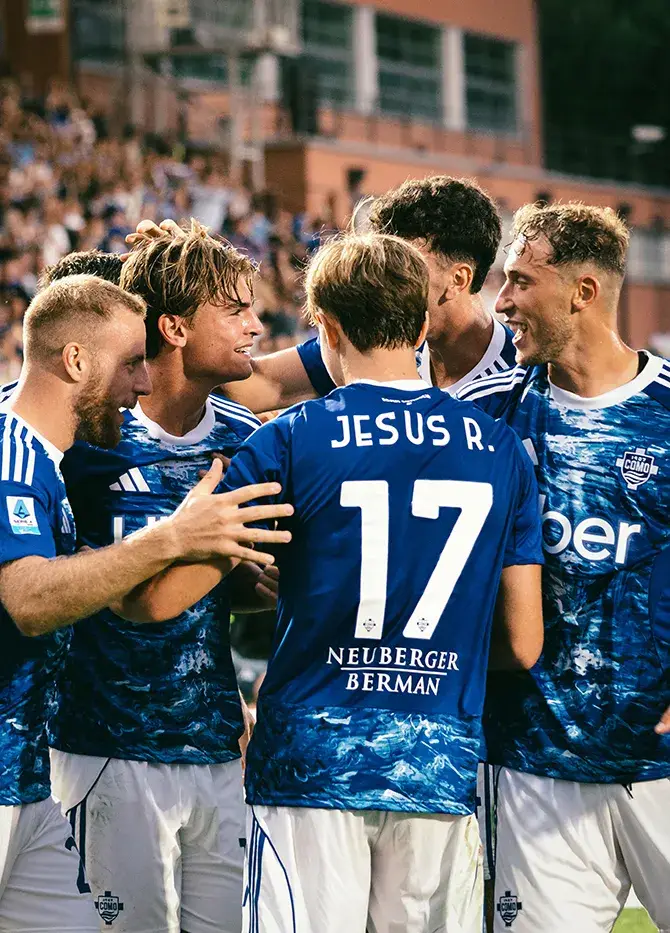

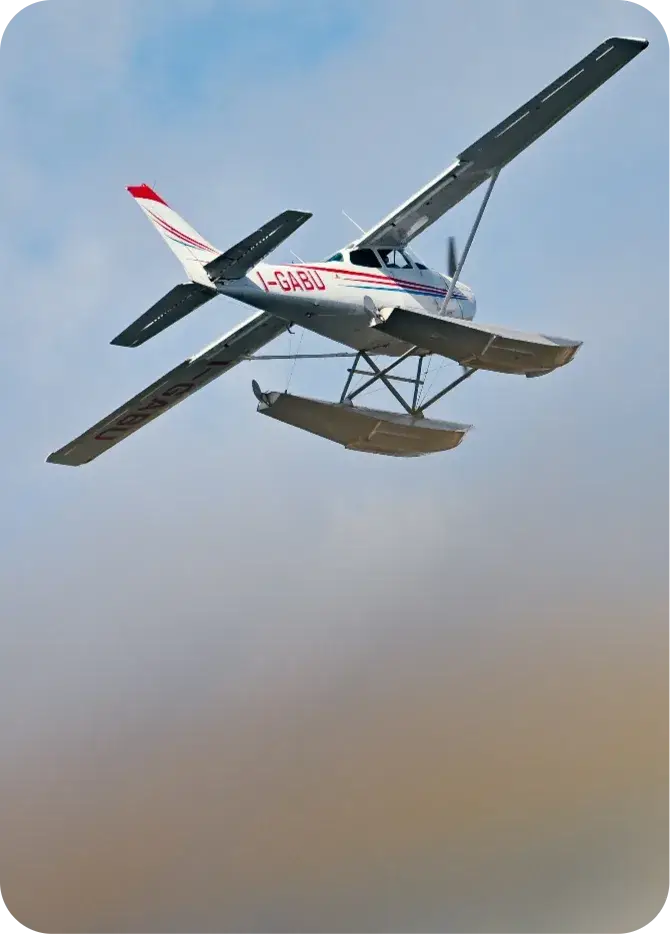
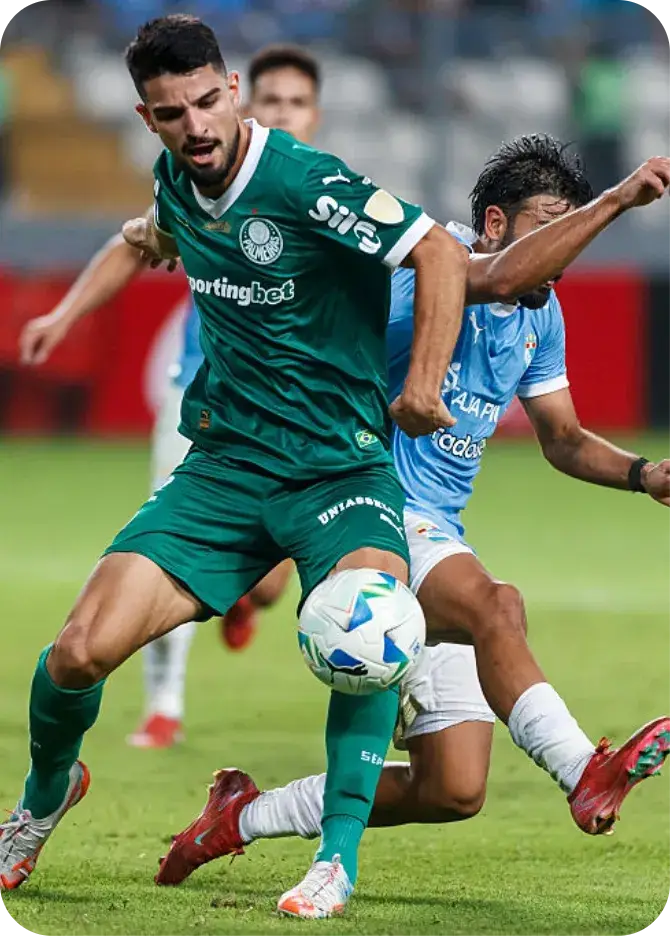

Como-Inter | Semifinal, first leg - Coppa Italia Frecciarossa 2025/26 | 03/03/2026 | Stadio Giuseppe Sinigaglia
Como-Inter 0-0
Como faced Inter at the Sinigaglia in a historic Coppa Italia semi-final, returning to this stage of the competition after more than 40 years.
Before kick-off, a minute of silence was observed in memory of Rino Marchesi, former Como 1907 head coach who recently passed away and led the club in that historic semi-final over four decades ago.
The match ended goalless, leaving everything to be decided in the return leg scheduled for the end of March at the Giuseppe Meazza in San Siro.
World Cup winners Pepe Reina, Raphaël Varane and Daniele De Rossi were in attendance in the stands to watch the match.
Como 1907 – Butez; Smolcic, Diego Carlos, Ramon, Valle (78’ Moreno); Perrone, Roberto (69’ Diao); Vojvoda (78’ Van Der Brempt), Da Cunha, Caqueret (85’ Baturina); Paz (85’ Douvikas).
Subs: Tornqvist, Vigorito, Calvina, Goldaniga, Morata, Lahdo, Rodriguez, Kuhn.
Head Coach: Cesc Fabregas
Inter – Martinez; Bisseck, Acerbi, Bastoni; Darmian (57’ Dumfries), Frattesi (85’ Mkhitaryan), Calhanoglu (57’ Zielinski), Sucic, Augusto; Diouf (68’ Luis Henrique); Esposito (57’ Thuram).
Subs: Sommer, Di Gennaro, De Vrij, Barella, Akanji, Dimarco, Lavelli.
Head Coach: Cristian Chivu
Stoppage time: 1’ (1st half), 3’ (2nd half)
Attendance: 10324
Referee: Sig. DI BELLO MARCO (Sezione di BRINDISI).
Assistant referees: Sig. PERETTI GIORGIO (Sezione di VERONA), Sig. COLAROSSI VALERIO (Sezione di ROMA 2).
Fourth official: Sig. ZUFFERLI LUCA (Sezione di UDINE).
Var: Sig. MAZZOLENI PAOLO SILVIO (Sezione di BERGAMO).
Avar: Sig. MARESCA FABIO (Sezione di NAPOLI).
For the second time in the competition’s history, the Stadio Giuseppe Sinigaglia will host a Coppa Italia semi-final. Como and Inter will meet on the shores of Lake Como for the first leg, with the return fixture scheduled to take place at the Stadio Giuseppe Meazza on 21 or 22 April.
The Lariani arrive for the match against the Nerazzurri following a 3–1 home victory over Lecce on Saturday afternoon. A few hours later, Cristian Chivu’s side also secured three points, defeating Genoa 2–0 at home. The BiancoBlu now face a team currently leading Serie A, ten points clear of second place, recording the league’s most prolific attack and the third-best defensive record. In this season’s Coppa Italia, Inter reached the semi-finals after overcoming Venezia 5–1 and Torino 2–1. The encounter with the Nerazzurri represents a demanding challenge against an experienced and well-organised side, a team with established playing patterns that know each other extremely well and approach matches with efficiency, directness and verticality.
Here are the words of Como 1907 head coach Cesc Fàbregas ahead of Como-Inter:
“We are at an important stage of the season. We must approach this match with the right focus and give it the importance it deserves. We need to deliver a strong performance, be clear about what we want to do and how we want to do it, and play with energy and determination in every situation.
“The team is in good shape and recovering well. We have prepared for this match with great attention to detail. We are facing the strongest side in the league, with players of the highest quality, and we want to put on a strong performance, fully aware of their strengths but ready to identify and exploit the small weaknesses that every team can have.
“Tomorrow the stadium must become our own little Bombonera. We need to create a special atmosphere in Como: the players must transmit energy to the supporters who, as always, will drive us on. United as one family, we can always go further.”
Inter
Against Como, the “Nerazzurri” are expected to line up in their traditional 3-5-2 formation, a system inherited by coach Cristian Chivu from his predecessor, but now played with a much more vertical approach. Inter will be without two key attacking players: captain Lautaro Martínez and Ange-Yoan Bonny, who picked up a knock in the match against Genoa. This could force the visitors to deploy the Thuram-Esposito partnership up front. Inter are in excellent form, with Federico Dimarco having already contributed seven goals and fifteen assists this season. The squad is strong and deep, and with the Milan derby coming up on Sunday, Chivu may rotate players who have featured less, such as Carlos Augusto, Diouf, Frattesi, and Acerbi, all high-quality options, as well as Darmian, returning to full fitness after injury, and Denzel Dumfries, a key figure who has already seen a few minutes on the pitch in the Champions League against Bodø/Glimt.
Inter's numbers this season speak for themselves and describe the level of production of this team. In Serie A, the Nerazzurri have scored 64 goals in 27 games, 18 more than the second-best attack in the league. From an offensive standpoint, Inter are first in completed passes in the penalty area (132), first in completed long passes (221), and first in completed passes overall, all statistics that attest to the fluidity of play and aggressiveness near the penalty area applied by Chivu's team.
For the Lariani, this represents a very tough challenge. Inter excel at drawing opponents out wide to open central channels, creating chances with efficiency. This makes the tactical battle between the two coaches particularly intriguing in what promises to be a high-level encounter.
Previous encounters
There have been 21 previous official matches between the two teams in Como: the record shows five wins for Como, five draws, and 11 wins for Inter.
Como's last victory against Inter dates back to September 1980, when Adriano Lombardi's goal proved decisive in the 1-0 final score.
Match details
Date: Tuesday, March 3, 2026
Kick-off: 21:00 CEST
Stadium: Giuseppe Sinigaglia
Referee: Di Bello
Assistants: Peretti - Colarossi
Where to watch
Italy: Mediaset Canale 5
Balkans: Arena Sport
USA: CBS
Latin America: FOX - DirecTV
MENA: MBC
Rest of the world: Check local listings.
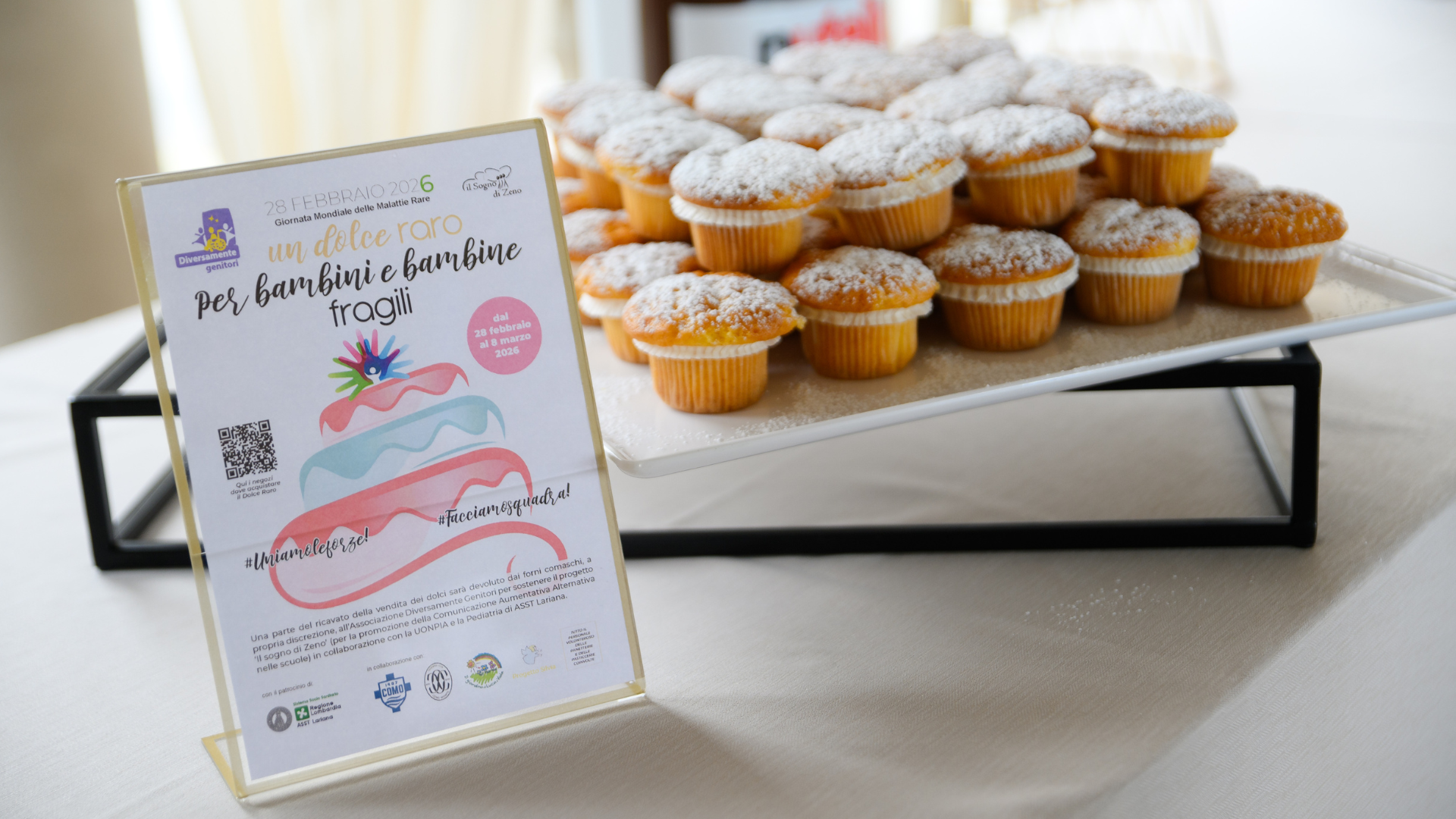
“Those who live with a rare disease often feel alone. This is why we believe in the value of unity: just like a team working toward a common goal, families together can find strength and mutual support. Our aim is to build a more inclusive and attentive community.” These are the words of Francesca Cappello, President of the association Diversamente Genitori, describing the spirit of a long-standing collaboration that sees Como 1907 and the local community working together for a cause that touches everyone.
From February 28 to March 8, 2026, the province of Como comes together for a new edition of Un Dolce Raro, the solidarity initiative promoted by Diversamente Genitori on the occasion of International Rare Disease Day. The initiative involves local pastry chefs and bakers who have created “special” sweets for this week: for each purchase, the businesses selling the treats commit to donating a portion of the proceeds to Diversamente Genitori.
This collaboration helps fund Il Sogno di Zeno, a project that provides training in Augmentative and Alternative Communication (AAC) for educators and teachers in local schools. AAC, a symbol-based language used by people with complex verbal communication difficulties, is an essential tool for social integration. Thanks to the funds raised, schools in the area can join the project free of charge and receive support from experts to break down isolation barriers, reduce stress and frustration and enable students to participate actively in lessons.
Como 1907’s support was particularly tangible during the home match against Lecce on February 28, coinciding with Rare Disease Day. Fondazione Como ETS purchased and distributed a supply of solidarity muffins in the hospitality areas during halftime, while the “Dolce Raro” was sold at the stadium bars, giving all fans the opportunity to contribute and come together for a cause that concerns the entire community.

Diversamente Genitori was founded to guide and support families receiving a diagnosis of disability or rare disease, a moment that often marks a turning point in the life of a family. Rare Disease Day is a key occasion to shine a spotlight on conditions often referred to as “orphaned,” due to limited awareness, resources, and treatments. In this context, Un Dolce Raro transforms remembrance into active support.
Over the years, the response from the local community has grown significantly. “The wave of solidarity shows us that we are addressing a real need,” emphasizes Francesca Cappello. “Como 1907, as a symbol of the territory, has the ability to unite diverse people under a single banner. Bringing the topic of rare diseases into the stadium allows us to reach thousands of fans and fight indifference, reminding every family that they are not alone.”
A message that underlines how, when a community moves together, inclusion becomes a shared responsibility.
Como-Inter | Semifinal, first leg - Coppa Italia Frecciarossa 2025/26 | 03/03/2026 | Stadio Giuseppe Sinigaglia
Como-Inter 0-0
Como faced Inter at the Sinigaglia in a historic Coppa Italia semi-final, returning to this stage of the competition after more than 40 years.
Before kick-off, a minute of silence was observed in memory of Rino Marchesi, former Como 1907 head coach who recently passed away and led the club in that historic semi-final over four decades ago.
The match ended goalless, leaving everything to be decided in the return leg scheduled for the end of March at the Giuseppe Meazza in San Siro.
World Cup winners Pepe Reina, Raphaël Varane and Daniele De Rossi were in attendance in the stands to watch the match.
Como 1907 – Butez; Smolcic, Diego Carlos, Ramon, Valle (78’ Moreno); Perrone, Roberto (69’ Diao); Vojvoda (78’ Van Der Brempt), Da Cunha, Caqueret (85’ Baturina); Paz (85’ Douvikas).
Subs: Tornqvist, Vigorito, Calvina, Goldaniga, Morata, Lahdo, Rodriguez, Kuhn.
Head Coach: Cesc Fabregas
Inter – Martinez; Bisseck, Acerbi, Bastoni; Darmian (57’ Dumfries), Frattesi (85’ Mkhitaryan), Calhanoglu (57’ Zielinski), Sucic, Augusto; Diouf (68’ Luis Henrique); Esposito (57’ Thuram).
Subs: Sommer, Di Gennaro, De Vrij, Barella, Akanji, Dimarco, Lavelli.
Head Coach: Cristian Chivu
Stoppage time: 1’ (1st half), 3’ (2nd half)
Attendance: 10324
Referee: Sig. DI BELLO MARCO (Sezione di BRINDISI).
Assistant referees: Sig. PERETTI GIORGIO (Sezione di VERONA), Sig. COLAROSSI VALERIO (Sezione di ROMA 2).
Fourth official: Sig. ZUFFERLI LUCA (Sezione di UDINE).
Var: Sig. MAZZOLENI PAOLO SILVIO (Sezione di BERGAMO).
Avar: Sig. MARESCA FABIO (Sezione di NAPOLI).
For the second time in the competition’s history, the Stadio Giuseppe Sinigaglia will host a Coppa Italia semi-final. Como and Inter will meet on the shores of Lake Como for the first leg, with the return fixture scheduled to take place at the Stadio Giuseppe Meazza on 21 or 22 April.
The Lariani arrive for the match against the Nerazzurri following a 3–1 home victory over Lecce on Saturday afternoon. A few hours later, Cristian Chivu’s side also secured three points, defeating Genoa 2–0 at home. The BiancoBlu now face a team currently leading Serie A, ten points clear of second place, recording the league’s most prolific attack and the third-best defensive record. In this season’s Coppa Italia, Inter reached the semi-finals after overcoming Venezia 5–1 and Torino 2–1. The encounter with the Nerazzurri represents a demanding challenge against an experienced and well-organised side, a team with established playing patterns that know each other extremely well and approach matches with efficiency, directness and verticality.
Here are the words of Como 1907 head coach Cesc Fàbregas ahead of Como-Inter:
“We are at an important stage of the season. We must approach this match with the right focus and give it the importance it deserves. We need to deliver a strong performance, be clear about what we want to do and how we want to do it, and play with energy and determination in every situation.
“The team is in good shape and recovering well. We have prepared for this match with great attention to detail. We are facing the strongest side in the league, with players of the highest quality, and we want to put on a strong performance, fully aware of their strengths but ready to identify and exploit the small weaknesses that every team can have.
“Tomorrow the stadium must become our own little Bombonera. We need to create a special atmosphere in Como: the players must transmit energy to the supporters who, as always, will drive us on. United as one family, we can always go further.”
Inter
Against Como, the “Nerazzurri” are expected to line up in their traditional 3-5-2 formation, a system inherited by coach Cristian Chivu from his predecessor, but now played with a much more vertical approach. Inter will be without two key attacking players: captain Lautaro Martínez and Ange-Yoan Bonny, who picked up a knock in the match against Genoa. This could force the visitors to deploy the Thuram-Esposito partnership up front. Inter are in excellent form, with Federico Dimarco having already contributed seven goals and fifteen assists this season. The squad is strong and deep, and with the Milan derby coming up on Sunday, Chivu may rotate players who have featured less, such as Carlos Augusto, Diouf, Frattesi, and Acerbi, all high-quality options, as well as Darmian, returning to full fitness after injury, and Denzel Dumfries, a key figure who has already seen a few minutes on the pitch in the Champions League against Bodø/Glimt.
Inter's numbers this season speak for themselves and describe the level of production of this team. In Serie A, the Nerazzurri have scored 64 goals in 27 games, 18 more than the second-best attack in the league. From an offensive standpoint, Inter are first in completed passes in the penalty area (132), first in completed long passes (221), and first in completed passes overall, all statistics that attest to the fluidity of play and aggressiveness near the penalty area applied by Chivu's team.
For the Lariani, this represents a very tough challenge. Inter excel at drawing opponents out wide to open central channels, creating chances with efficiency. This makes the tactical battle between the two coaches particularly intriguing in what promises to be a high-level encounter.
Previous encounters
There have been 21 previous official matches between the two teams in Como: the record shows five wins for Como, five draws, and 11 wins for Inter.
Como's last victory against Inter dates back to September 1980, when Adriano Lombardi's goal proved decisive in the 1-0 final score.
Match details
Date: Tuesday, March 3, 2026
Kick-off: 21:00 CEST
Stadium: Giuseppe Sinigaglia
Referee: Di Bello
Assistants: Peretti - Colarossi
Where to watch
Italy: Mediaset Canale 5
Balkans: Arena Sport
USA: CBS
Latin America: FOX - DirecTV
MENA: MBC
Rest of the world: Check local listings.
“Those who live with a rare disease often feel alone. This is why we believe in the value of unity: just like a team working toward a common goal, families together can find strength and mutual support. Our aim is to build a more inclusive and attentive community.” These are the words of Francesca Cappello, President of the association Diversamente Genitori, describing the spirit of a long-standing collaboration that sees Como 1907 and the local community working together for a cause that touches everyone.
From February 28 to March 8, 2026, the province of Como comes together for a new edition of Un Dolce Raro, the solidarity initiative promoted by Diversamente Genitori on the occasion of International Rare Disease Day. The initiative involves local pastry chefs and bakers who have created “special” sweets for this week: for each purchase, the businesses selling the treats commit to donating a portion of the proceeds to Diversamente Genitori.
This collaboration helps fund Il Sogno di Zeno, a project that provides training in Augmentative and Alternative Communication (AAC) for educators and teachers in local schools. AAC, a symbol-based language used by people with complex verbal communication difficulties, is an essential tool for social integration. Thanks to the funds raised, schools in the area can join the project free of charge and receive support from experts to break down isolation barriers, reduce stress and frustration and enable students to participate actively in lessons.
Como 1907’s support was particularly tangible during the home match against Lecce on February 28, coinciding with Rare Disease Day. Fondazione Como ETS purchased and distributed a supply of solidarity muffins in the hospitality areas during halftime, while the “Dolce Raro” was sold at the stadium bars, giving all fans the opportunity to contribute and come together for a cause that concerns the entire community.
Diversamente Genitori was founded to guide and support families receiving a diagnosis of disability or rare disease, a moment that often marks a turning point in the life of a family. Rare Disease Day is a key occasion to shine a spotlight on conditions often referred to as “orphaned,” due to limited awareness, resources, and treatments. In this context, Un Dolce Raro transforms remembrance into active support.
Over the years, the response from the local community has grown significantly. “The wave of solidarity shows us that we are addressing a real need,” emphasizes Francesca Cappello. “Como 1907, as a symbol of the territory, has the ability to unite diverse people under a single banner. Bringing the topic of rare diseases into the stadium allows us to reach thousands of fans and fight indifference, reminding every family that they are not alone.”
A message that underlines how, when a community moves together, inclusion becomes a shared responsibility.
Como-Inter | Semifinal, first leg - Coppa Italia Frecciarossa 2025/26 | 03/03/2026 | Stadio Giuseppe Sinigaglia
Como-Inter 0-0
Como faced Inter at the Sinigaglia in a historic Coppa Italia semi-final, returning to this stage of the competition after more than 40 years.
Before kick-off, a minute of silence was observed in memory of Rino Marchesi, former Como 1907 head coach who recently passed away and led the club in that historic semi-final over four decades ago.
The match ended goalless, leaving everything to be decided in the return leg scheduled for the end of March at the Giuseppe Meazza in San Siro.
World Cup winners Pepe Reina, Raphaël Varane and Daniele De Rossi were in attendance in the stands to watch the match.
Como 1907 – Butez; Smolcic, Diego Carlos, Ramon, Valle (78’ Moreno); Perrone, Roberto (69’ Diao); Vojvoda (78’ Van Der Brempt), Da Cunha, Caqueret (85’ Baturina); Paz (85’ Douvikas).
Subs: Tornqvist, Vigorito, Calvina, Goldaniga, Morata, Lahdo, Rodriguez, Kuhn.
Head Coach: Cesc Fabregas
Inter – Martinez; Bisseck, Acerbi, Bastoni; Darmian (57’ Dumfries), Frattesi (85’ Mkhitaryan), Calhanoglu (57’ Zielinski), Sucic, Augusto; Diouf (68’ Luis Henrique); Esposito (57’ Thuram).
Subs: Sommer, Di Gennaro, De Vrij, Barella, Akanji, Dimarco, Lavelli.
Head Coach: Cristian Chivu
Stoppage time: 1’ (1st half), 3’ (2nd half)
Attendance: 10324
Referee: Sig. DI BELLO MARCO (Sezione di BRINDISI).
Assistant referees: Sig. PERETTI GIORGIO (Sezione di VERONA), Sig. COLAROSSI VALERIO (Sezione di ROMA 2).
Fourth official: Sig. ZUFFERLI LUCA (Sezione di UDINE).
Var: Sig. MAZZOLENI PAOLO SILVIO (Sezione di BERGAMO).
Avar: Sig. MARESCA FABIO (Sezione di NAPOLI).
For the second time in the competition’s history, the Stadio Giuseppe Sinigaglia will host a Coppa Italia semi-final. Como and Inter will meet on the shores of Lake Como for the first leg, with the return fixture scheduled to take place at the Stadio Giuseppe Meazza on 21 or 22 April.
The Lariani arrive for the match against the Nerazzurri following a 3–1 home victory over Lecce on Saturday afternoon. A few hours later, Cristian Chivu’s side also secured three points, defeating Genoa 2–0 at home. The BiancoBlu now face a team currently leading Serie A, ten points clear of second place, recording the league’s most prolific attack and the third-best defensive record. In this season’s Coppa Italia, Inter reached the semi-finals after overcoming Venezia 5–1 and Torino 2–1. The encounter with the Nerazzurri represents a demanding challenge against an experienced and well-organised side, a team with established playing patterns that know each other extremely well and approach matches with efficiency, directness and verticality.
Here are the words of Como 1907 head coach Cesc Fàbregas ahead of Como-Inter:
“We are at an important stage of the season. We must approach this match with the right focus and give it the importance it deserves. We need to deliver a strong performance, be clear about what we want to do and how we want to do it, and play with energy and determination in every situation.
“The team is in good shape and recovering well. We have prepared for this match with great attention to detail. We are facing the strongest side in the league, with players of the highest quality, and we want to put on a strong performance, fully aware of their strengths but ready to identify and exploit the small weaknesses that every team can have.
“Tomorrow the stadium must become our own little Bombonera. We need to create a special atmosphere in Como: the players must transmit energy to the supporters who, as always, will drive us on. United as one family, we can always go further.”
Inter
Against Como, the “Nerazzurri” are expected to line up in their traditional 3-5-2 formation, a system inherited by coach Cristian Chivu from his predecessor, but now played with a much more vertical approach. Inter will be without two key attacking players: captain Lautaro Martínez and Ange-Yoan Bonny, who picked up a knock in the match against Genoa. This could force the visitors to deploy the Thuram-Esposito partnership up front. Inter are in excellent form, with Federico Dimarco having already contributed seven goals and fifteen assists this season. The squad is strong and deep, and with the Milan derby coming up on Sunday, Chivu may rotate players who have featured less, such as Carlos Augusto, Diouf, Frattesi, and Acerbi, all high-quality options, as well as Darmian, returning to full fitness after injury, and Denzel Dumfries, a key figure who has already seen a few minutes on the pitch in the Champions League against Bodø/Glimt.
Inter's numbers this season speak for themselves and describe the level of production of this team. In Serie A, the Nerazzurri have scored 64 goals in 27 games, 18 more than the second-best attack in the league. From an offensive standpoint, Inter are first in completed passes in the penalty area (132), first in completed long passes (221), and first in completed passes overall, all statistics that attest to the fluidity of play and aggressiveness near the penalty area applied by Chivu's team.
For the Lariani, this represents a very tough challenge. Inter excel at drawing opponents out wide to open central channels, creating chances with efficiency. This makes the tactical battle between the two coaches particularly intriguing in what promises to be a high-level encounter.
Previous encounters
There have been 21 previous official matches between the two teams in Como: the record shows five wins for Como, five draws, and 11 wins for Inter.
Como's last victory against Inter dates back to September 1980, when Adriano Lombardi's goal proved decisive in the 1-0 final score.
Match details
Date: Tuesday, March 3, 2026
Kick-off: 21:00 CEST
Stadium: Giuseppe Sinigaglia
Referee: Di Bello
Assistants: Peretti - Colarossi
Where to watch
Italy: Mediaset Canale 5
Balkans: Arena Sport
USA: CBS
Latin America: FOX - DirecTV
MENA: MBC
Rest of the world: Check local listings.
“Those who live with a rare disease often feel alone. This is why we believe in the value of unity: just like a team working toward a common goal, families together can find strength and mutual support. Our aim is to build a more inclusive and attentive community.” These are the words of Francesca Cappello, President of the association Diversamente Genitori, describing the spirit of a long-standing collaboration that sees Como 1907 and the local community working together for a cause that touches everyone.
From February 28 to March 8, 2026, the province of Como comes together for a new edition of Un Dolce Raro, the solidarity initiative promoted by Diversamente Genitori on the occasion of International Rare Disease Day. The initiative involves local pastry chefs and bakers who have created “special” sweets for this week: for each purchase, the businesses selling the treats commit to donating a portion of the proceeds to Diversamente Genitori.
This collaboration helps fund Il Sogno di Zeno, a project that provides training in Augmentative and Alternative Communication (AAC) for educators and teachers in local schools. AAC, a symbol-based language used by people with complex verbal communication difficulties, is an essential tool for social integration. Thanks to the funds raised, schools in the area can join the project free of charge and receive support from experts to break down isolation barriers, reduce stress and frustration and enable students to participate actively in lessons.
Como 1907’s support was particularly tangible during the home match against Lecce on February 28, coinciding with Rare Disease Day. Fondazione Como ETS purchased and distributed a supply of solidarity muffins in the hospitality areas during halftime, while the “Dolce Raro” was sold at the stadium bars, giving all fans the opportunity to contribute and come together for a cause that concerns the entire community.
Diversamente Genitori was founded to guide and support families receiving a diagnosis of disability or rare disease, a moment that often marks a turning point in the life of a family. Rare Disease Day is a key occasion to shine a spotlight on conditions often referred to as “orphaned,” due to limited awareness, resources, and treatments. In this context, Un Dolce Raro transforms remembrance into active support.
Over the years, the response from the local community has grown significantly. “The wave of solidarity shows us that we are addressing a real need,” emphasizes Francesca Cappello. “Como 1907, as a symbol of the territory, has the ability to unite diverse people under a single banner. Bringing the topic of rare diseases into the stadium allows us to reach thousands of fans and fight indifference, reminding every family that they are not alone.”
A message that underlines how, when a community moves together, inclusion becomes a shared responsibility.
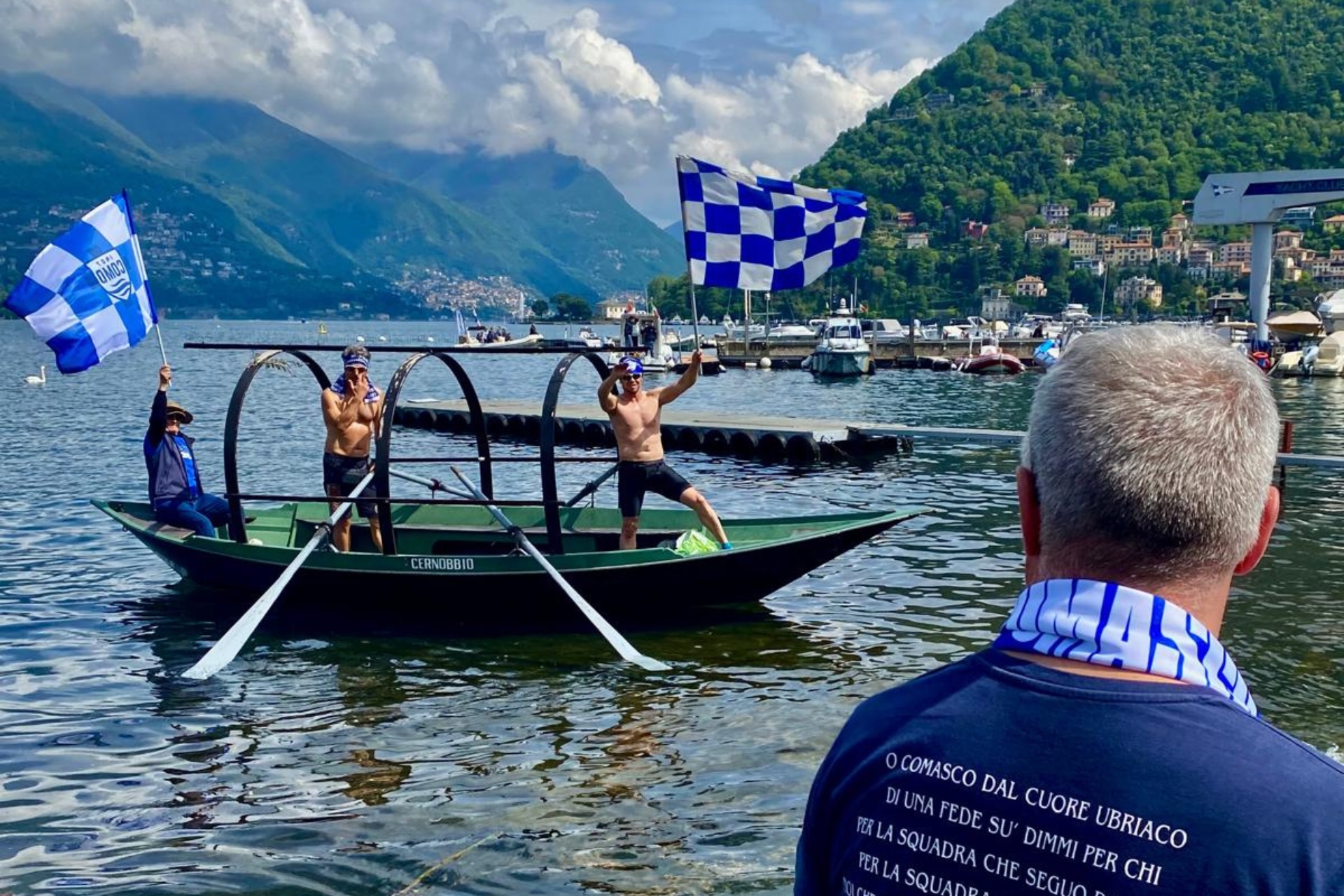
If you have been by the water on a home match day, you have probably seen it before you heard it. A small boat cutting across the lake, a burst of blue and white, flags snapping in the breeze. Three figures aboard, one of them standing tall at the prow with a chequered flag held like a signal flare.
In the photos, it looks almost staged. In reality, it is simply Como.
The boat is a Lucia, the traditional Larian rowing boat more formally known as a batèl, recognised by its long, slim hull and the curved wooden arches that once held a protective cover for fishermen spending long hours out on the lake. Over time, it became known as the Lucia because of its connection to I promessi sposi by Alessandro Manzoni, where an escape across the lake fixed the image of this kind of boat in the cultural memory of the area.
Today, that same silhouette turns up in postcards, local regattas and rowing traditions like the Palio del Lario, and in the work of groups who preserve the Lucie Manzoniane as living heritage, not museum pieces.
And now it turns up in Como colours.
The idea belongs to Adriano Sala, known locally as the Inventor, an eighty year old with the kind of energy that makes retirement sound like a new schedule, not a finish line. Alongside him are his son Moris and their friend Paolo Liboni, both triathletes, both as happy with effort as they are with celebration.
Together they call themselves Laghee de la Lucia, and on home match days they row roughly six kilometres across the lake, waving flags as they approach the hangar area before kick off. The point is support, of course. But it is also a gesture of place. A way of saying that football here is never fully separated from the lake, the boats, the shoreline, the people watching from stones and steps.
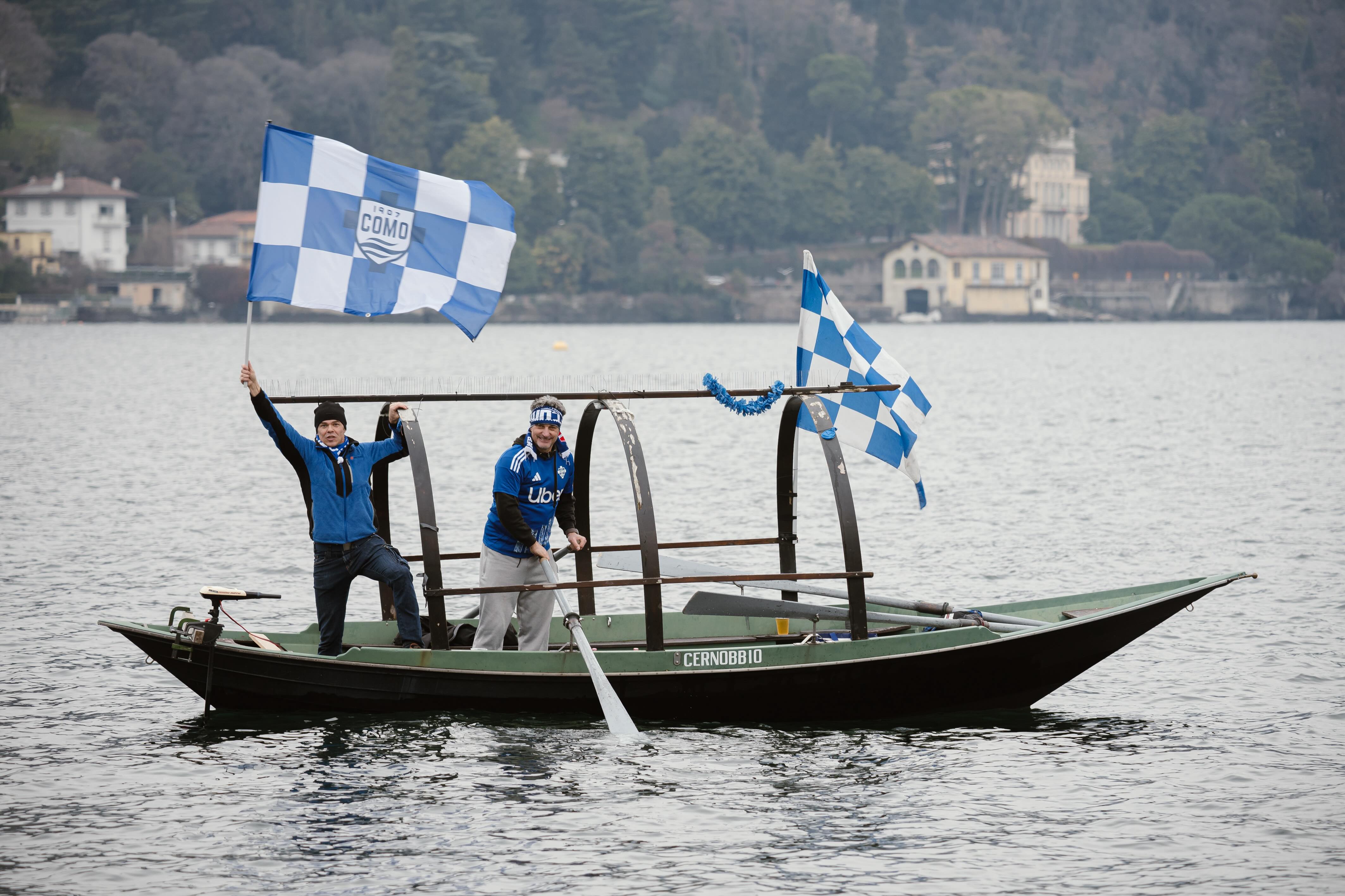
As the images depict, the scenes the Lucia creates lands in full colour. The boat sits low on the water, oars extended, three wooden arches framing the figures onboard. One man holds a Como flag, another lifts the chequered blue and white like a banner. Onshore, a supporter stands in a scarf, watching them arrive as if it is the most normal thing in the world.
Or when the lake is winter grey, the same boat becomes something else. Olive branches are tied near the arches. Ribbons trail. The flag still flies. The ritual does not change with the season, it simply adjusts its palette.
That continuity is part of why this has caught on. It feels rooted, not invented for attention. It is football support with local grammar.
Historically, the batèl was designed for work. Flat bottomed, stable, practical, used to carry fish and goods along the shore to markets and kitchens. The arches were not decoration, they were function, supporting a cover that protected occupants during long trips on the water.
That is what makes the visual twist so satisfying when it appears in biancoblù. It is the same working form, but repurposed into a moving celebration, not in spite of tradition but through it.
It also makes sense in a city where the stadium is woven into the lakefront. Stadio Giuseppe Sinigaglia is one of the few places where you can step out of the turnstiles and be at the water in minutes. So when a boat arrives waving flags, it does not feel like theatre imported from somewhere else. It feels native.
Adriano describes it simply. Retirement is not an endpoint, it is a new starting line. The idea had been in his head for years, but he could not have done it alone. Moris talks about alignment. Following the club’s progress, seeing values match values, feeling the same sense of momentum. Paolo talks about what it feels like on the boat. Listening to Adriano’s stories, learning through proximity, realising that the best support is often built from small repeated actions rather than big declarations.
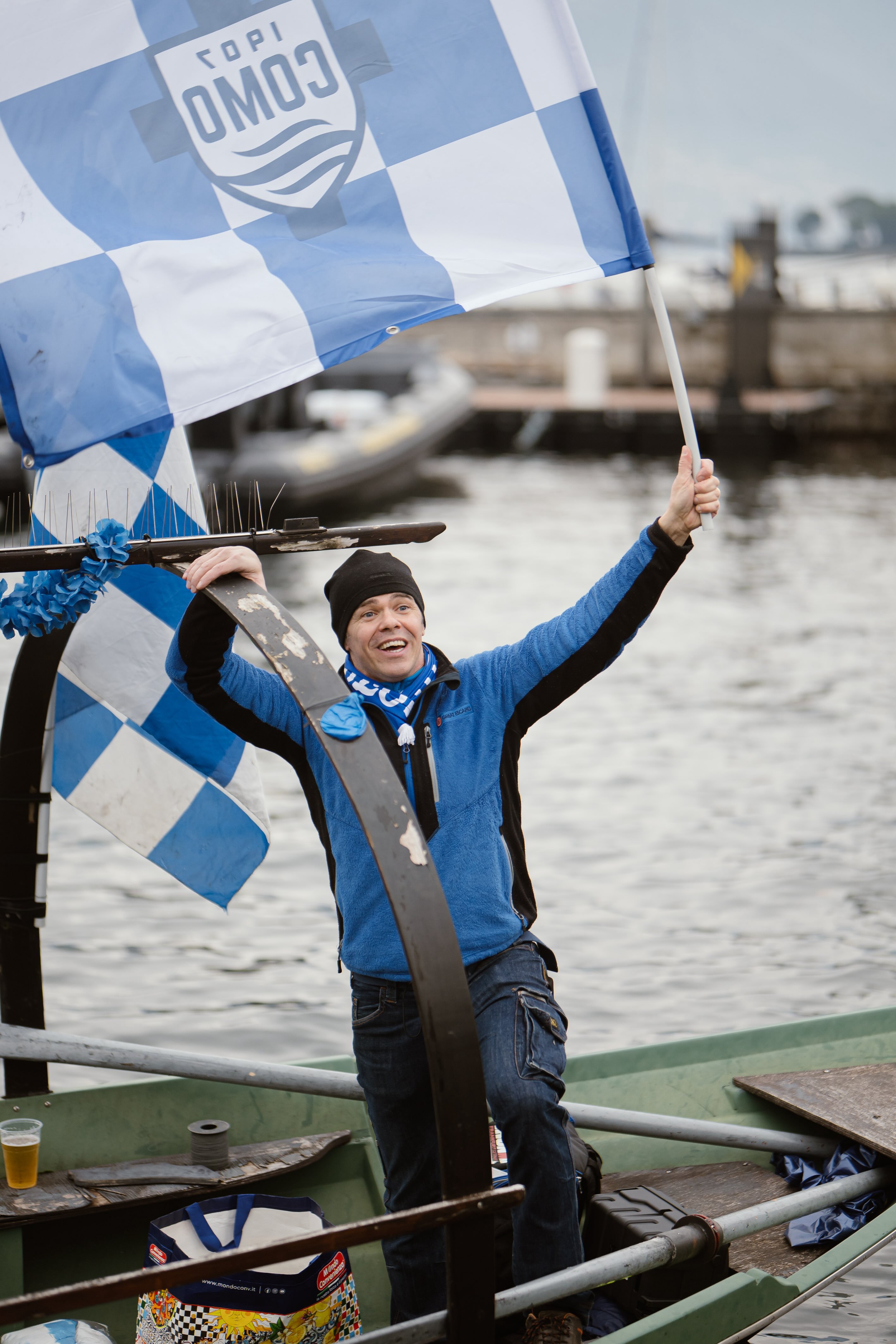
The chemistry is the whole point. Experience and youth, memory and fitness, lake craft and modern endurance. A tiny crew that feels like a mascot for the wider Curva mood: committed, inventive, slightly unrepeatable anywhere else.
There is also a community layer. A Lucia is one of those objects tourists notice immediately, even if they do not know what it is. It is a shape that pulls a phone out of a pocket. It starts conversations. In that sense, the Laghee de la Lucia do something quietly useful: they introduce a piece of local heritage to visitors in the most natural way possible, by using it, not explaining it.
In the end, this is not just about getting near the stadium. It is about making an intergenerational bridge that stays visible from the shore. A reminder that support can be loud without being aggressive, and that the healthiest traditions are the ones that keep moving.
If you see them on the water, you will understand quickly. The flags are only half the message.
The other half is the boat.
 Como 1907 Home Jersey 2025/26€110
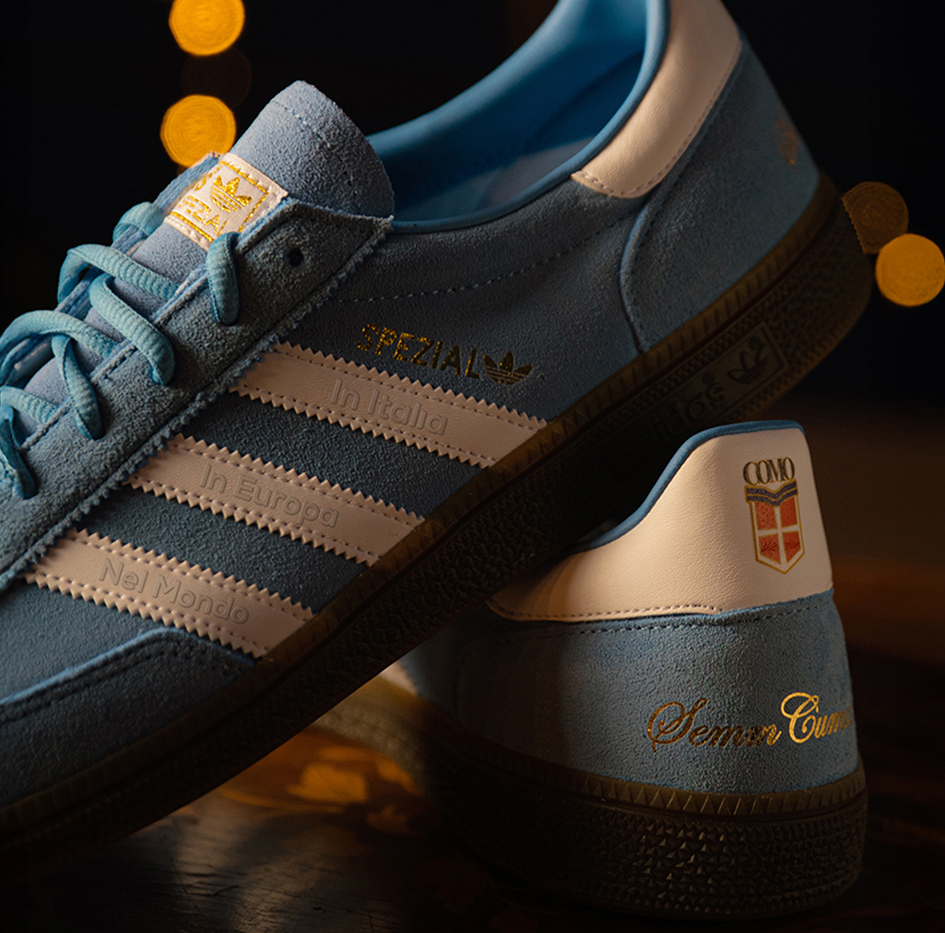 Spezial Semm Cumasch Premium€200
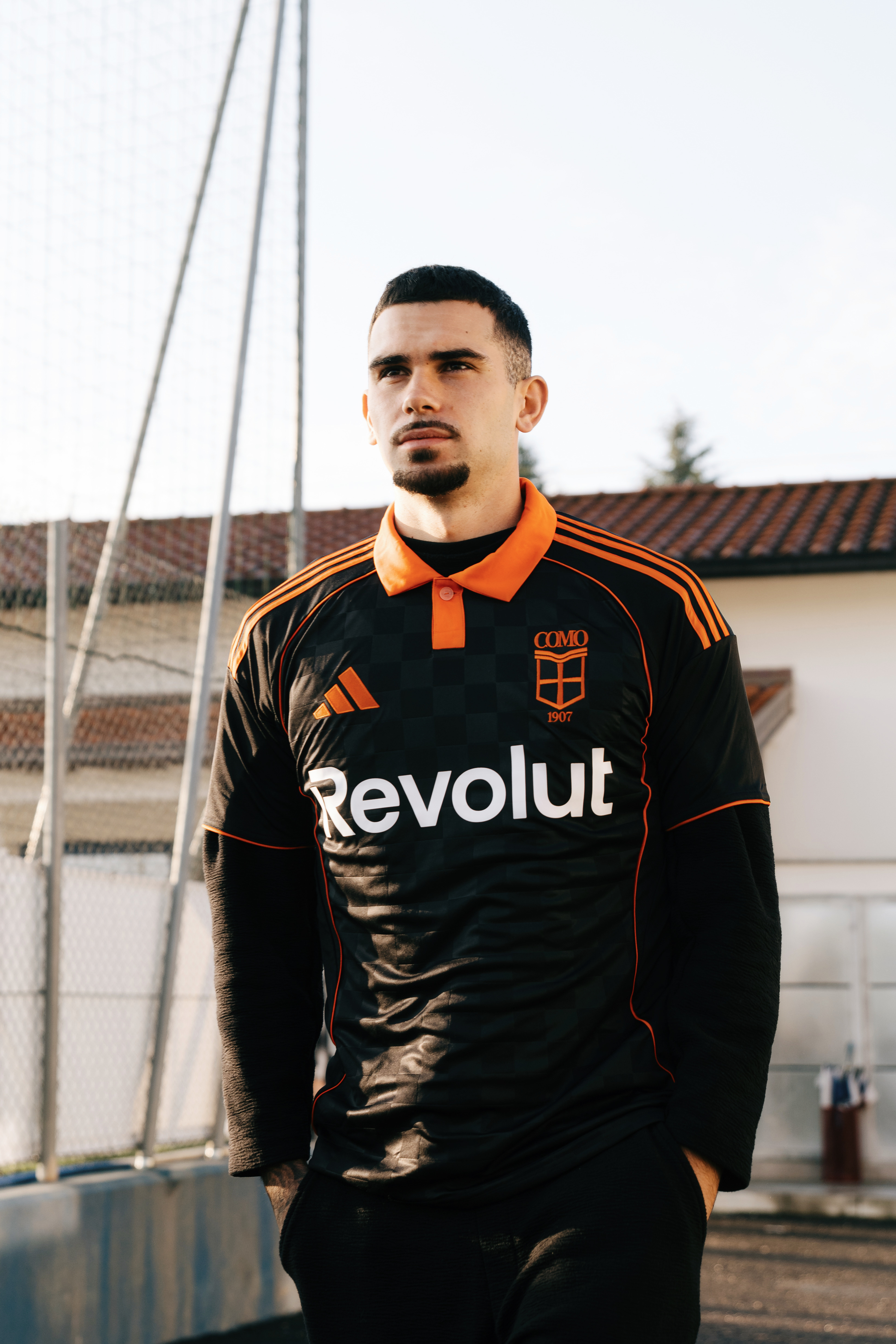 Como 1907 Third Jersey 2025/26€110
Calendar
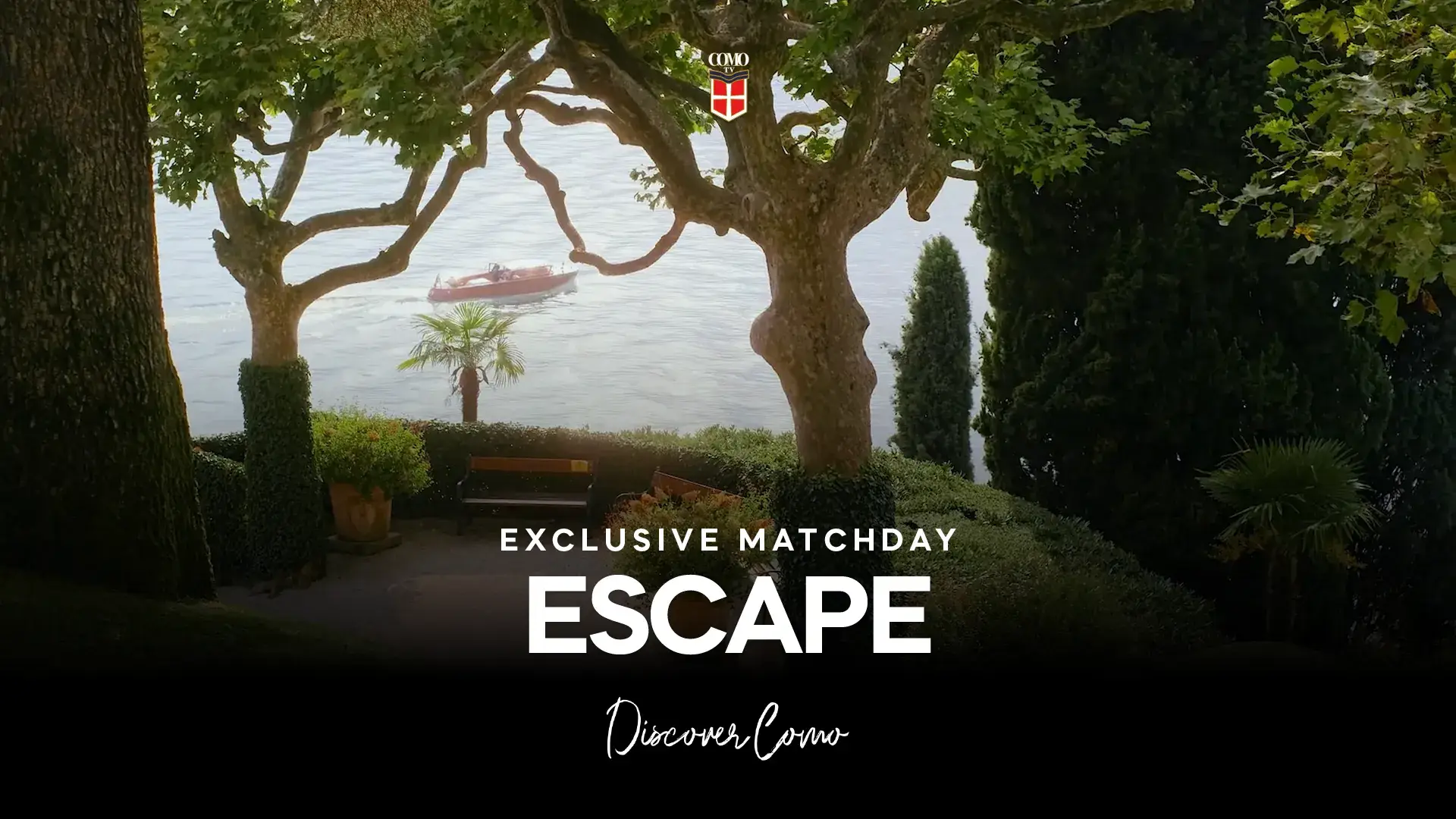 DISCOVER COMO | EXCLUSIVE MATCHDAY ESCAPEDISCOVER COMO : EXCLUSIVE MATCHDAY ESCAPE - Set against the timeless beauty of Lake Como, this episode explores a thoughtfully curated matchday journey created by Como 1907, anchored by the incomparable Villa del Balbianello. From private wooden boat arrivals and unhurried walks through 18th-century gardens once favored by explorers, artists, and Hollywood, to the charged atmosphere of a Como 1907 match, the experience reveals Lake Como at its most cinematic. Blending heritage, elegance, and authentic Italian life, it reflects a carefully curated way of discovering the lake: one that can be found through the tourism experiences section of the Como 1907 website.
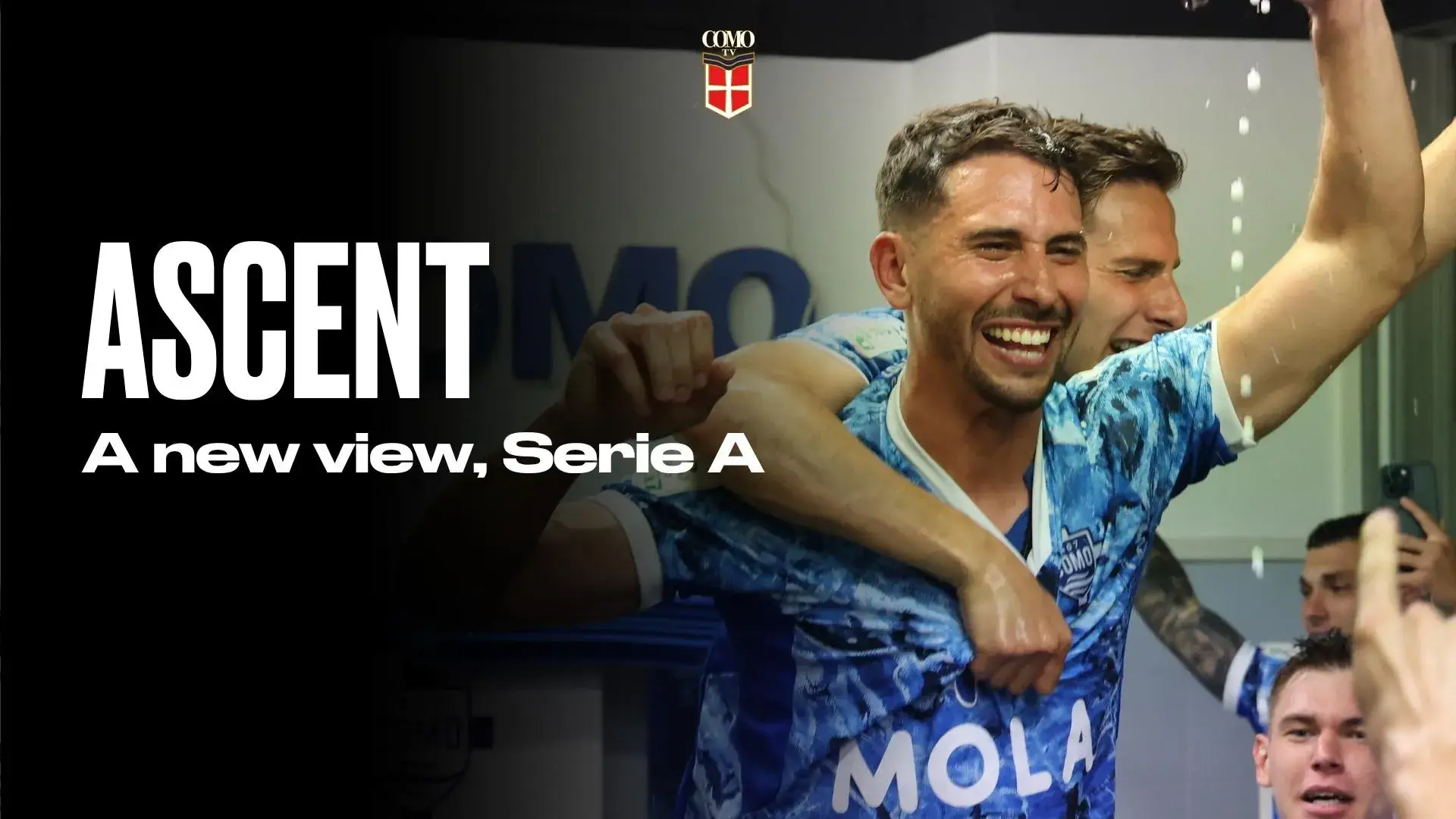 Ascent, a new view: Serie AComo 1907 and a long-awaited return to Serie A after 21 years. “We were a group, and we became a family.” Alessio Iovine, Patrick Cutrone, Lucas Da Cunha, Gabriel Strefezza, and Edoardo Goldaniga share all the emotions of the 2023/24 season — historic, thrilling, and one of a kind — set against the stunning backdrop of Villa Carminati. A season worthy of a movie.
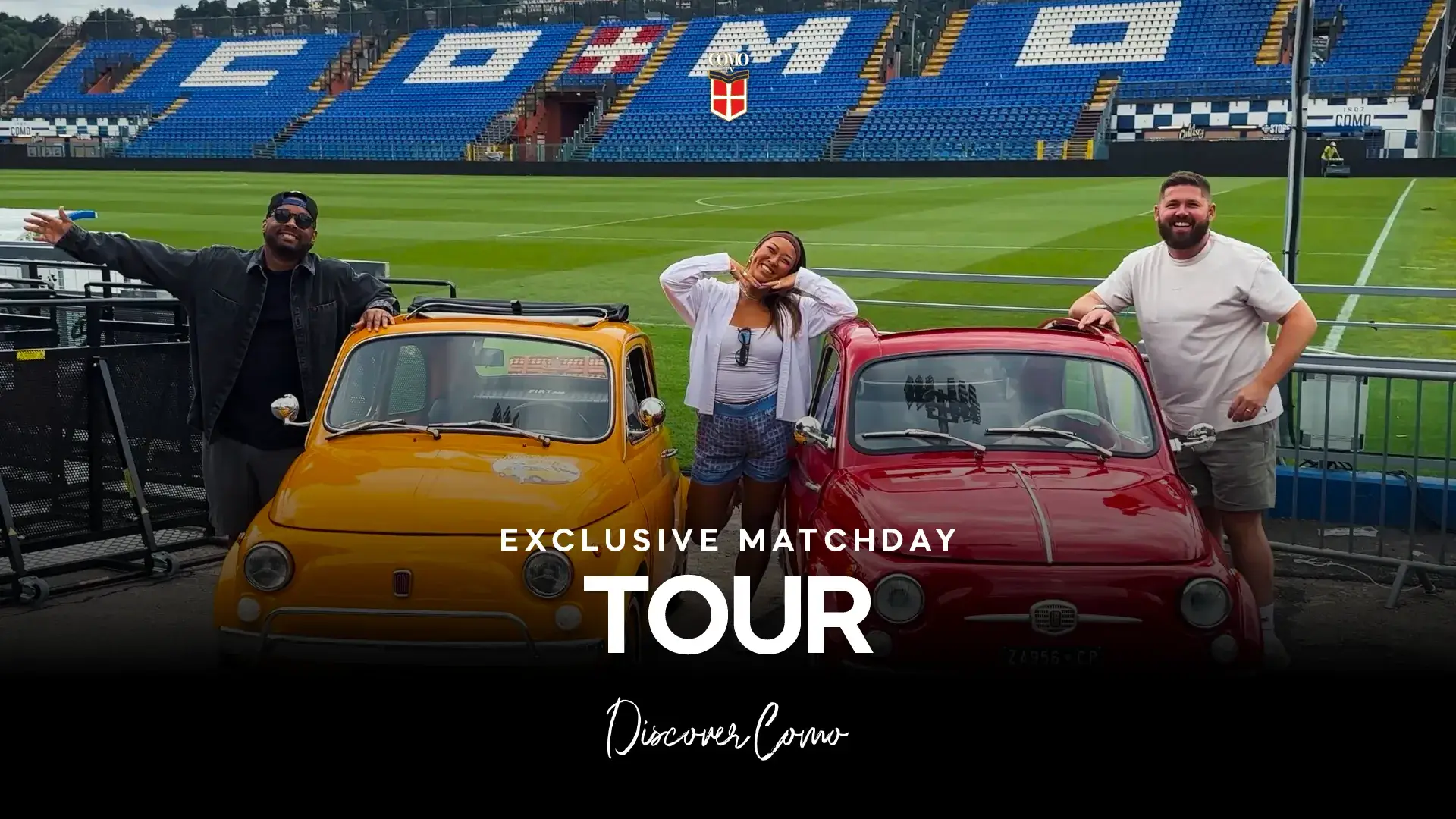 DISCOVER COMO | EXCLUSIVE MATCHDAY TOURDiscover Como invites you to experience the EXCLUSIVE MATCH DAY TOUR: a one-of-a-kind journey that blends football, heritage, and timeless Italian style. In this feature, Francesca Biffi guides us from a private two-hour drive in a vintage Fiat 500 to an elevated match day experience, featuring covered grandstand seating and hospitality access overlooking Lake Como. From the charm of the Fiat drive to the electric atmosphere of the stadium, the tour transforms match day into an unforgettable celebration of Italian heritage.
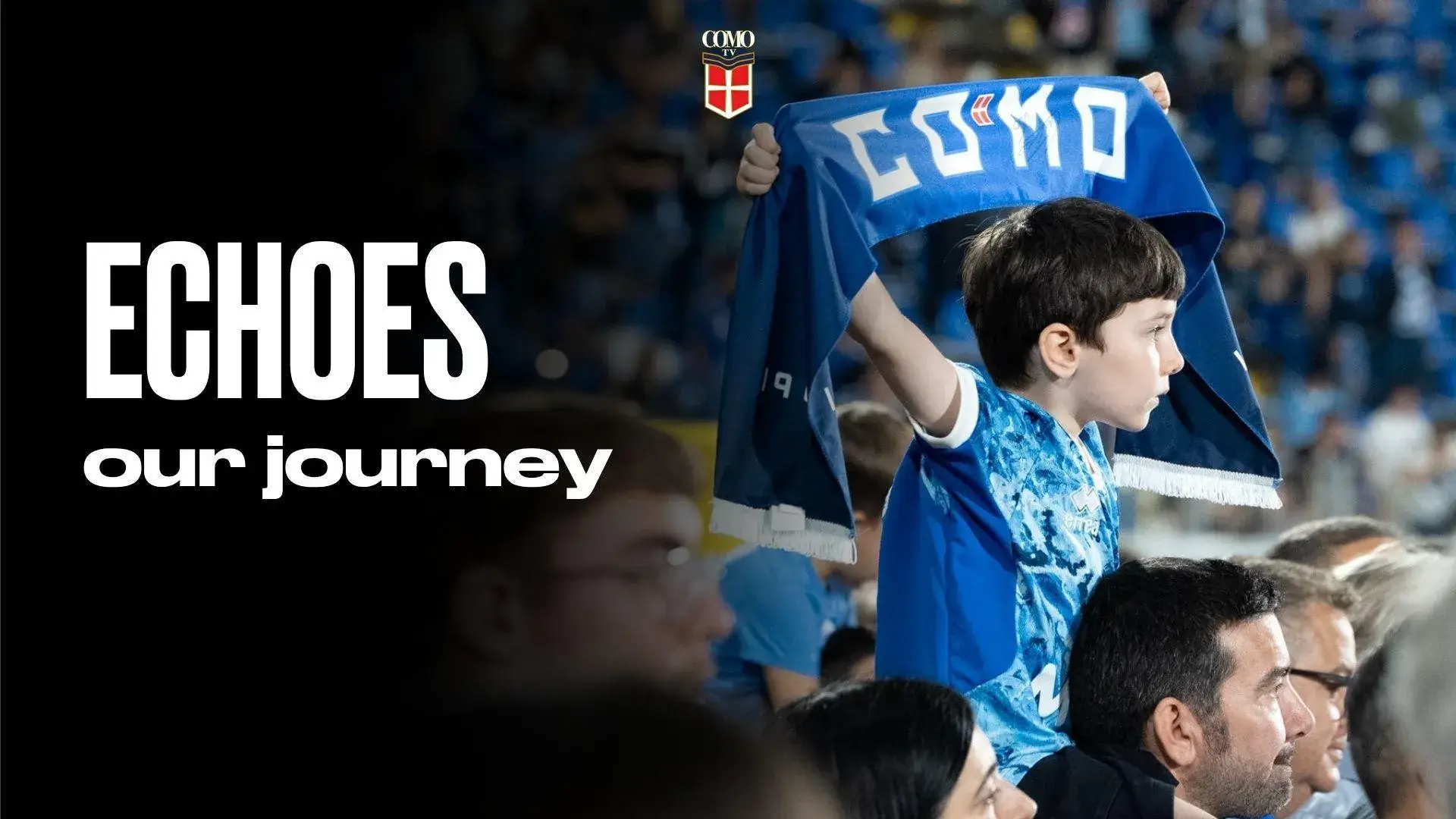 Echos - Our JourneyThe journey of Como 1907 told through the voices of two fans — a father and his daughter — who share what it means to support the biancoblù and to be part of a football family determined to return to the heart of Italian and European football.
 DISCOVER COMO | AT VILLA FLORIDISCOVER COMO : AT VILLA FLORI - Como 1907 players Alex Valle and Jesús Rodríguez take a vintage Fiat 124 Spider for a spin along Lake Como: a drive that’s as much about friendship as football. The drive leads them to Villa Flori, where the conversation deepens in the villa’s serene lakeside courtyard. Over coffee, they reflect on life between Spain and Italy, the differences in football culture, and the sense of family and belonging they’ve found in Como. Discover Como captures a rare, personal glimpse of two teammates connecting beyond the game: through humor, honesty, and the beauty of life at the lake.