


Como 1907 Logo

Como 1907 - Official Website | Serie A

Welcome to Como 1907

Latest Updates

A New Taste on the Lake

There is always a certain excitement when something new opens on Lake Como, but some arrivals feel bigger than others. The new Lake Como EDITION, which opened in March 2026, is one of them. Set in Griante, directly opposite Bellagio, the hotel brings a different rhythm to this side of the lake, one built around understated design, wellbeing and the kind of hospitality that understands luxury as atmosphere rather than noise. Its general manager Anton Moore describes a place shaped by style, texture and the view itself, with interiors designed to keep the eye moving naturally back towards the water

That sense of occasion gives the latest Taste of Como episode its charm. Rather than simply dropping in for a meal, Jean Butez and Edoardo Goldaniga step into a setting that already feels like part of a wider story about the lake right now. In the Discover Como episode, the EDITION is presented as a place where international design meets local calm, where a boat ride to Bellagio takes only minutes and where every detail, from Carrara marble to the scent in the lobby, is meant to create something immersive and memorable. It is refined, certainly, but not stiff. There is warmth in the vision too, from the terrace at Renzo to the spa’s gentler language of rest, recovery and listening to the body.


At the centre of it all is Mauro Colagreco, one of the most admired chefs working today. The Argentine born chef is best known for Mirazur in Menton, his three Michelin star restaurant on the French Riviera, and the Lake Como EDITION describes Cetino as his first restaurant in Italy. That makes his presence here feel especially meaningful. In the transcript, he speaks about the opening in deeply personal terms, describing it as emotional and as a return to family memory and the recipes he learned from his grandmother.

That context makes the Taste of Como episode feel more than a simple chef cameo. In the kitchen, Colagreco greets Butez and Goldaniga with easy humour and the sort of calm authority that makes everything look simpler than it is. The challenge begins with a delicate rose of fish and beetroot, then moves on to pasta, where the balance of the trio quickly becomes clear. Jean, with his precision and gloves, looks comfortable with the finer work. Edoardo is more openly honest about his strengths, cheerfully admitting that he likes eating more than cooking. Colagreco enjoys the contrast, joking about France versus Italy and then spotting the obvious truth as soon as the tortelli begin to take shape. Even if he does not cook much at home, he says of Goldaniga, it is in his blood.

What makes the episode work is not technical perfection, though there are flashes of that too. It is the feeling of three people relaxing into each other’s company. There are the little domestic details that make the exchange softer and more human, Goldaniga talking about his new daughter Gilda, Butez sharing that he has two children, Colagreco replying with stories of his own sons. The kitchen becomes less a stage and more a meeting point, somewhere between a lesson and a lunch, full of teasing, encouragement and the occasional moment of mock VAR when a tortello opens unexpectedly. By the time they sit down to eat at Renzo overlooking the lake, what matters most is not whose dish looks best but the atmosphere they have created together. Colagreco says he loved cooking with them because they clearly care about doing things well. That comes across in every part of the episode.


In many ways, it also says something broader about the moment Lake Como is having. The EDITION arrives as a new international address, but one that is trying to root itself in the place rather than float above it. The language around the hotel is all about design, memory, the senses and the lake itself. Moore even says he admires what Como 1907 has built in terms of community and believes the hotel will attract the same kind of globally minded guest. It is a small detail, but a telling one. Increasingly, the most interesting stories around Como are the ones where football, hospitality and lifestyle stop feeling like separate worlds.

That is why this particular Taste of Como feels so well placed within BLU. It is not just a chef episode and not just a hotel story. It is a snapshot of the lake as it is now, confident, international and still unmistakably local. There is a goalkeeper, a defender and a world famous chef standing together over beetroot, fish and pasta, with Bellagio across the water and a brand new hotel behind them. It should not really be surprising that it works. On Lake Como, the best stories usually begin that way.

Watch the latest episode of Taste of Como now on Como TV.

Ignace Van der Brempt and The Art of Ada...

Ignace Van der Brempt arrived at Como with a football education that already stretched beyond his years. Developed at Club Brugge, shaped in Austria with Salzburg and sharpened in Germany with Hamburg, he joined the club in summer 2024 with experience of different systems, different expectations and different ways of living the game.

Cesc Fàbregas valued his physicality and versatility, whether at right back or in the centre, and Van der Brempt has approached life at Como in much the same way he approaches football, with calm, intelligence and a willingness to adapt.

That is part of what makes him such an interesting player to speak to. The modern full back is asked to do almost everything. Defend deep, step into midfield, cover space, carry the ball forward, recover shape. Van der Brempt talks about the role with the calm clarity of someone who has already had to adjust more than once. Spend enough time moving between countries, dressing rooms and football cultures, and you either become fixed in your habits or you learn how to move with change. His story is very much the second.


“Living in different football cultures changes you a lot. Every country has a different rhythm, a different way of thinking about the game and about life. As a player you learn to adapt tactically, physically, even mentally, but as a person it teaches you openness. You meet new people, new languages, new ways of seeing things. It makes you more flexible and more grateful for every experience”.

Italy had lived in his imagination long before it became reality. Not only as a league he admired, but as a place he already associated with atmosphere, warmth and memory.

“Before I came here, I played with Bruges the Viareggio Cup and from that moment I was really like ‘Whoa, Italy was really nice, the food was really good’. And then from that moment I always wanted to play in Italy.”

It is a telling answer because Van der Brempt does not separate football from the feel of a place. He talks about the game, but also about food, atmosphere and belonging. For players who leave home young, settling is rarely just about tactics. It is about whether a city allows you to breathe. In Como, with the lake beside the stadium and a sense of calm built into the landscape, he seems to have found somewhere that fits.

“Yes, when I knew I would come to Como, I was very excited to see the lake. And then the first time when you come here, you see the stadium, you see the lake... it’s really something special. I was convinced that this was the right place to be and that I could grow as a player. And yeah, it’s working well”.

When he talks about football and his role, he talks about balance, timing and intelligence.

“For me, the balance between defending and attacking is what I like. I think I enjoy my defensive side reading the game, winning duels, making tackles, but also helping the team move forward. I think the modern full backs need a lot of energy and intelligence because you are constantly switching roles during the match”.


That idea of constantly switching roles feels like a neat way of understanding his career too. Belgium gave him one football language. Austria challenged it. Germany added another layer. Each move asked him to adapt.

“I think what changed me the most in football, it was my first experience in Austria. Because as a young player you grow up in Belgium and there you are taught something in one way and you think in your head ‘it’s not possible the other way’. And then you come to another place, a different culture, a different mentality, and then you see that, yeah, there is a different way. And, for me, that was a little bit difficult to adapt the first time, to know that, yeah, and to believe that there are different ways to play football. So this was the hardest for me. And which changed my life.”

There is maturity in that honesty. Van der Brempt does not try to make adaptation sound neat or glamorous. He describes it as it really is, difficult at first, then slowly rewarding. The same directness comes through when he talks about how he settles somewhere new. Not through routine or familiarity, but through food.

“I think the first thing I do is like eating the traditional dishes. I think if you go to the country that you need to learn the culture and I think with the food I always start to adapt. So when I was in Austria, the first thing I ate was a Schnitzel and then in Italy it was a pizza and a pasta and tiramisu. So I think it’s the first thing you do when you come to a new country. You’re living the first weeks in the hotel, so I think the food is important”.

It feels fitting at Como, a place where surroundings matter and where life off the pitch is part of the wider experience. Even his style reflects that sense of place.

“I think my fashion style it’s classic, nothing special. I like to dress well. When we have a party or I go out for dinner, I like to dress well. I like the Italian style... it’s nice how the people dress here.”

Classic, nothing special, he says, and that is part of the appeal. There is no effort to overstate who he is. The same applies on the pitch, where his deepest satisfaction still comes from the basics of defending well.

“I get a lot of satisfaction if I win my duels, if I take the ball from my opponent, that he has a difficult game and, if we have a clean sheet, it always feels really nice. And then after, if I do my defensive things, I like to go forward, to give crosses, to make actions in front, to also help the team to score a goal.”

Away from football, he sounds much the same as he does on it. Rest matters, but only for a while. Then the urge to move again returns.

“My ideal holiday starts quite for sure after the season. You need to rest also, so the first three weeks I do really nothing, I just enjoy the sun with my family, with my friends. And then at the end of the holidays I like to do some more things, and to play football again, because after some weeks you miss it. And then to be ready also for the next season. So yeah, first I do it quite on the beach, easy, and then after I like to work also in the off season to be ready for the next season.”

That may be the thread running through him. Calm, but not stillness. Comfort, but never complacency. He enjoys where he is, but he is always looking ahead. Ask what says most about him away from football and the answer returns to the decisions that have shaped everything.


“I think that I’m ambitious and I dare to take some risks, to take my own decisions like leaving my country when I was young and going to different places, it made me the man who I am now. My family and how I treat them, it’s really important, and my girlfriend and also my teammates. I think it’s really important for me and I’m just a nice guy and I want to be good for everybody and to help everybody and to be the best on the pitch.”

That feels like the key to him. Ignace Van der Brempt came to Italy because it was a dream, but he has stayed open to everything that dream demands. At Como, that makes him feel well placed, not just as a defender, but as someone still growing into the player and person he wants to become.

When Racing Returns to the Lake

There are some places that make speed look especially good, and Lake Como has been doing that for a very long time. This spring, E1 returns to the lake, bringing its all electric RaceBirds back to one of the most striking settings in sport. It is also the only fresh water stop on this season’s calendar, giving the race a character all of its own.

That sense of return is important. E1 is still a young championship, but Lake Como is already part of its story. E1 presents itself as more than a race series, describing the championship as a platform for electric innovation, marine mobility and greater awareness around protecting waterways. Its RaceBirds, with their electric propulsion and foiling technology, are designed to glide above the surface in a way that feels futuristic, but on Lake Como that modernity sits easily alongside a much older racing culture.


Because racing on this lake did not begin with E1. Yacht Club Como traces organised racing here back to 1934, while the Centomiglia del Lario, first run in 1949, became one of the defining events in Italian powerboating and is now described as one of the oldest continuously running powerboat races in the world. Over the decades, Lake Como built a reputation not only for competition, but for craftsmanship, engineering and the kind of local pride that turns racing into part of a place’s identity.

That relationship with performance extends beyond the water too. The Concorso d’Eleganza Villa d’Este, first held in 1929 through the Automobile Club of Como and Villa d’Este, remains one of the most celebrated events in the classic car world. It is not racing, but it reflects the same instinct that has shaped so much of Como’s history, an appreciation for machinery not just as function, but as beauty, spectacle and design.


That is what makes the return of E1 feel so well suited to the lake. The championship arrives with all the language of the future, electric propulsion, foiling technology, sustainability and innovation, while Lake Como brings memory, atmosphere and a deep rooted sporting tradition. The result is not a clash between old and new, but something much more seamless. On Lake Como, racing has always been about more than speed alone. It is about how movement fits into a landscape, how performance can still feel elegant, and how sport becomes part of the wider character of a place. E1 is not introducing that idea here. It is returning to it.

The E1 Lake Como GP, part of the UIM E1 World Championship and hosted by Villa d'Este will take place on April 24-25 2026.

Ivan Smolčić MVP Against Napoli
A New Taste on the Lake

There is always a certain excitement when something new opens on Lake Como, but some arrivals feel bigger than others. The new Lake Como EDITION, which opened in March 2026, is one of them. Set in Griante, directly opposite Bellagio, the hotel brings a different rhythm to this side of the lake, one built around understated design, wellbeing and the kind of hospitality that understands luxury as atmosphere rather than noise. Its general manager Anton Moore describes a place shaped by style, texture and the view itself, with interiors designed to keep the eye moving naturally back towards the water

That sense of occasion gives the latest Taste of Como episode its charm. Rather than simply dropping in for a meal, Jean Butez and Edoardo Goldaniga step into a setting that already feels like part of a wider story about the lake right now. In the Discover Como episode, the EDITION is presented as a place where international design meets local calm, where a boat ride to Bellagio takes only minutes and where every detail, from Carrara marble to the scent in the lobby, is meant to create something immersive and memorable. It is refined, certainly, but not stiff. There is warmth in the vision too, from the terrace at Renzo to the spa’s gentler language of rest, recovery and listening to the body.


At the centre of it all is Mauro Colagreco, one of the most admired chefs working today. The Argentine born chef is best known for Mirazur in Menton, his three Michelin star restaurant on the French Riviera, and the Lake Como EDITION describes Cetino as his first restaurant in Italy. That makes his presence here feel especially meaningful. In the transcript, he speaks about the opening in deeply personal terms, describing it as emotional and as a return to family memory and the recipes he learned from his grandmother.

That context makes the Taste of Como episode feel more than a simple chef cameo. In the kitchen, Colagreco greets Butez and Goldaniga with easy humour and the sort of calm authority that makes everything look simpler than it is. The challenge begins with a delicate rose of fish and beetroot, then moves on to pasta, where the balance of the trio quickly becomes clear. Jean, with his precision and gloves, looks comfortable with the finer work. Edoardo is more openly honest about his strengths, cheerfully admitting that he likes eating more than cooking. Colagreco enjoys the contrast, joking about France versus Italy and then spotting the obvious truth as soon as the tortelli begin to take shape. Even if he does not cook much at home, he says of Goldaniga, it is in his blood.

What makes the episode work is not technical perfection, though there are flashes of that too. It is the feeling of three people relaxing into each other’s company. There are the little domestic details that make the exchange softer and more human, Goldaniga talking about his new daughter Gilda, Butez sharing that he has two children, Colagreco replying with stories of his own sons. The kitchen becomes less a stage and more a meeting point, somewhere between a lesson and a lunch, full of teasing, encouragement and the occasional moment of mock VAR when a tortello opens unexpectedly. By the time they sit down to eat at Renzo overlooking the lake, what matters most is not whose dish looks best but the atmosphere they have created together. Colagreco says he loved cooking with them because they clearly care about doing things well. That comes across in every part of the episode.


In many ways, it also says something broader about the moment Lake Como is having. The EDITION arrives as a new international address, but one that is trying to root itself in the place rather than float above it. The language around the hotel is all about design, memory, the senses and the lake itself. Moore even says he admires what Como 1907 has built in terms of community and believes the hotel will attract the same kind of globally minded guest. It is a small detail, but a telling one. Increasingly, the most interesting stories around Como are the ones where football, hospitality and lifestyle stop feeling like separate worlds.

That is why this particular Taste of Como feels so well placed within BLU. It is not just a chef episode and not just a hotel story. It is a snapshot of the lake as it is now, confident, international and still unmistakably local. There is a goalkeeper, a defender and a world famous chef standing together over beetroot, fish and pasta, with Bellagio across the water and a brand new hotel behind them. It should not really be surprising that it works. On Lake Como, the best stories usually begin that way.

Watch the latest episode of Taste of Como now on Como TV.

Ignace Van der Brempt and The Art of Adapting

Ignace Van der Brempt arrived at Como with a football education that already stretched beyond his years. Developed at Club Brugge, shaped in Austria with Salzburg and sharpened in Germany with Hamburg, he joined the club in summer 2024 with experience of different systems, different expectations and different ways of living the game.

Cesc Fàbregas valued his physicality and versatility, whether at right back or in the centre, and Van der Brempt has approached life at Como in much the same way he approaches football, with calm, intelligence and a willingness to adapt.

That is part of what makes him such an interesting player to speak to. The modern full back is asked to do almost everything. Defend deep, step into midfield, cover space, carry the ball forward, recover shape. Van der Brempt talks about the role with the calm clarity of someone who has already had to adjust more than once. Spend enough time moving between countries, dressing rooms and football cultures, and you either become fixed in your habits or you learn how to move with change. His story is very much the second.


“Living in different football cultures changes you a lot. Every country has a different rhythm, a different way of thinking about the game and about life. As a player you learn to adapt tactically, physically, even mentally, but as a person it teaches you openness. You meet new people, new languages, new ways of seeing things. It makes you more flexible and more grateful for every experience”.

Italy had lived in his imagination long before it became reality. Not only as a league he admired, but as a place he already associated with atmosphere, warmth and memory.

“Before I came here, I played with Bruges the Viareggio Cup and from that moment I was really like ‘Whoa, Italy was really nice, the food was really good’. And then from that moment I always wanted to play in Italy.”

It is a telling answer because Van der Brempt does not separate football from the feel of a place. He talks about the game, but also about food, atmosphere and belonging. For players who leave home young, settling is rarely just about tactics. It is about whether a city allows you to breathe. In Como, with the lake beside the stadium and a sense of calm built into the landscape, he seems to have found somewhere that fits.

“Yes, when I knew I would come to Como, I was very excited to see the lake. And then the first time when you come here, you see the stadium, you see the lake... it’s really something special. I was convinced that this was the right place to be and that I could grow as a player. And yeah, it’s working well”.

When he talks about football and his role, he talks about balance, timing and intelligence.

“For me, the balance between defending and attacking is what I like. I think I enjoy my defensive side reading the game, winning duels, making tackles, but also helping the team move forward. I think the modern full backs need a lot of energy and intelligence because you are constantly switching roles during the match”.


That idea of constantly switching roles feels like a neat way of understanding his career too. Belgium gave him one football language. Austria challenged it. Germany added another layer. Each move asked him to adapt.

“I think what changed me the most in football, it was my first experience in Austria. Because as a young player you grow up in Belgium and there you are taught something in one way and you think in your head ‘it’s not possible the other way’. And then you come to another place, a different culture, a different mentality, and then you see that, yeah, there is a different way. And, for me, that was a little bit difficult to adapt the first time, to know that, yeah, and to believe that there are different ways to play football. So this was the hardest for me. And which changed my life.”

There is maturity in that honesty. Van der Brempt does not try to make adaptation sound neat or glamorous. He describes it as it really is, difficult at first, then slowly rewarding. The same directness comes through when he talks about how he settles somewhere new. Not through routine or familiarity, but through food.

“I think the first thing I do is like eating the traditional dishes. I think if you go to the country that you need to learn the culture and I think with the food I always start to adapt. So when I was in Austria, the first thing I ate was a Schnitzel and then in Italy it was a pizza and a pasta and tiramisu. So I think it’s the first thing you do when you come to a new country. You’re living the first weeks in the hotel, so I think the food is important”.

It feels fitting at Como, a place where surroundings matter and where life off the pitch is part of the wider experience. Even his style reflects that sense of place.

“I think my fashion style it’s classic, nothing special. I like to dress well. When we have a party or I go out for dinner, I like to dress well. I like the Italian style... it’s nice how the people dress here.”

Classic, nothing special, he says, and that is part of the appeal. There is no effort to overstate who he is. The same applies on the pitch, where his deepest satisfaction still comes from the basics of defending well.

“I get a lot of satisfaction if I win my duels, if I take the ball from my opponent, that he has a difficult game and, if we have a clean sheet, it always feels really nice. And then after, if I do my defensive things, I like to go forward, to give crosses, to make actions in front, to also help the team to score a goal.”

Away from football, he sounds much the same as he does on it. Rest matters, but only for a while. Then the urge to move again returns.

“My ideal holiday starts quite for sure after the season. You need to rest also, so the first three weeks I do really nothing, I just enjoy the sun with my family, with my friends. And then at the end of the holidays I like to do some more things, and to play football again, because after some weeks you miss it. And then to be ready also for the next season. So yeah, first I do it quite on the beach, easy, and then after I like to work also in the off season to be ready for the next season.”

That may be the thread running through him. Calm, but not stillness. Comfort, but never complacency. He enjoys where he is, but he is always looking ahead. Ask what says most about him away from football and the answer returns to the decisions that have shaped everything.


“I think that I’m ambitious and I dare to take some risks, to take my own decisions like leaving my country when I was young and going to different places, it made me the man who I am now. My family and how I treat them, it’s really important, and my girlfriend and also my teammates. I think it’s really important for me and I’m just a nice guy and I want to be good for everybody and to help everybody and to be the best on the pitch.”

That feels like the key to him. Ignace Van der Brempt came to Italy because it was a dream, but he has stayed open to everything that dream demands. At Como, that makes him feel well placed, not just as a defender, but as someone still growing into the player and person he wants to become.

When Racing Returns to the Lake

There are some places that make speed look especially good, and Lake Como has been doing that for a very long time. This spring, E1 returns to the lake, bringing its all electric RaceBirds back to one of the most striking settings in sport. It is also the only fresh water stop on this season’s calendar, giving the race a character all of its own.

That sense of return is important. E1 is still a young championship, but Lake Como is already part of its story. E1 presents itself as more than a race series, describing the championship as a platform for electric innovation, marine mobility and greater awareness around protecting waterways. Its RaceBirds, with their electric propulsion and foiling technology, are designed to glide above the surface in a way that feels futuristic, but on Lake Como that modernity sits easily alongside a much older racing culture.


Because racing on this lake did not begin with E1. Yacht Club Como traces organised racing here back to 1934, while the Centomiglia del Lario, first run in 1949, became one of the defining events in Italian powerboating and is now described as one of the oldest continuously running powerboat races in the world. Over the decades, Lake Como built a reputation not only for competition, but for craftsmanship, engineering and the kind of local pride that turns racing into part of a place’s identity.

That relationship with performance extends beyond the water too. The Concorso d’Eleganza Villa d’Este, first held in 1929 through the Automobile Club of Como and Villa d’Este, remains one of the most celebrated events in the classic car world. It is not racing, but it reflects the same instinct that has shaped so much of Como’s history, an appreciation for machinery not just as function, but as beauty, spectacle and design.


That is what makes the return of E1 feel so well suited to the lake. The championship arrives with all the language of the future, electric propulsion, foiling technology, sustainability and innovation, while Lake Como brings memory, atmosphere and a deep rooted sporting tradition. The result is not a clash between old and new, but something much more seamless. On Lake Como, racing has always been about more than speed alone. It is about how movement fits into a landscape, how performance can still feel elegant, and how sport becomes part of the wider character of a place. E1 is not introducing that idea here. It is returning to it.

The E1 Lake Como GP, part of the UIM E1 World Championship and hosted by Villa d'Este will take place on April 24-25 2026.

A New Taste on the Lake

There is always a certain excitement when something new opens on Lake Como, but some arrivals feel bigger than others. The new Lake Como EDITION, which opened in March 2026, is one of them. Set in Griante, directly opposite Bellagio, the hotel brings a different rhythm to this side of the lake, one built around understated design, wellbeing and the kind of hospitality that understands luxury as atmosphere rather than noise. Its general manager Anton Moore describes a place shaped by style, texture and the view itself, with interiors designed to keep the eye moving naturally back towards the water

That sense of occasion gives the latest Taste of Como episode its charm. Rather than simply dropping in for a meal, Jean Butez and Edoardo Goldaniga step into a setting that already feels like part of a wider story about the lake right now. In the Discover Como episode, the EDITION is presented as a place where international design meets local calm, where a boat ride to Bellagio takes only minutes and where every detail, from Carrara marble to the scent in the lobby, is meant to create something immersive and memorable. It is refined, certainly, but not stiff. There is warmth in the vision too, from the terrace at Renzo to the spa’s gentler language of rest, recovery and listening to the body.


At the centre of it all is Mauro Colagreco, one of the most admired chefs working today. The Argentine born chef is best known for Mirazur in Menton, his three Michelin star restaurant on the French Riviera, and the Lake Como EDITION describes Cetino as his first restaurant in Italy. That makes his presence here feel especially meaningful. In the transcript, he speaks about the opening in deeply personal terms, describing it as emotional and as a return to family memory and the recipes he learned from his grandmother.

That context makes the Taste of Como episode feel more than a simple chef cameo. In the kitchen, Colagreco greets Butez and Goldaniga with easy humour and the sort of calm authority that makes everything look simpler than it is. The challenge begins with a delicate rose of fish and beetroot, then moves on to pasta, where the balance of the trio quickly becomes clear. Jean, with his precision and gloves, looks comfortable with the finer work. Edoardo is more openly honest about his strengths, cheerfully admitting that he likes eating more than cooking. Colagreco enjoys the contrast, joking about France versus Italy and then spotting the obvious truth as soon as the tortelli begin to take shape. Even if he does not cook much at home, he says of Goldaniga, it is in his blood.

What makes the episode work is not technical perfection, though there are flashes of that too. It is the feeling of three people relaxing into each other’s company. There are the little domestic details that make the exchange softer and more human, Goldaniga talking about his new daughter Gilda, Butez sharing that he has two children, Colagreco replying with stories of his own sons. The kitchen becomes less a stage and more a meeting point, somewhere between a lesson and a lunch, full of teasing, encouragement and the occasional moment of mock VAR when a tortello opens unexpectedly. By the time they sit down to eat at Renzo overlooking the lake, what matters most is not whose dish looks best but the atmosphere they have created together. Colagreco says he loved cooking with them because they clearly care about doing things well. That comes across in every part of the episode.


In many ways, it also says something broader about the moment Lake Como is having. The EDITION arrives as a new international address, but one that is trying to root itself in the place rather than float above it. The language around the hotel is all about design, memory, the senses and the lake itself. Moore even says he admires what Como 1907 has built in terms of community and believes the hotel will attract the same kind of globally minded guest. It is a small detail, but a telling one. Increasingly, the most interesting stories around Como are the ones where football, hospitality and lifestyle stop feeling like separate worlds.

That is why this particular Taste of Como feels so well placed within BLU. It is not just a chef episode and not just a hotel story. It is a snapshot of the lake as it is now, confident, international and still unmistakably local. There is a goalkeeper, a defender and a world famous chef standing together over beetroot, fish and pasta, with Bellagio across the water and a brand new hotel behind them. It should not really be surprising that it works. On Lake Como, the best stories usually begin that way.

Watch the latest episode of Taste of Como now on Como TV.

Ignace Van der Brempt and The Art of Adapting

Ignace Van der Brempt arrived at Como with a football education that already stretched beyond his years. Developed at Club Brugge, shaped in Austria with Salzburg and sharpened in Germany with Hamburg, he joined the club in summer 2024 with experience of different systems, different expectations and different ways of living the game.

Cesc Fàbregas valued his physicality and versatility, whether at right back or in the centre, and Van der Brempt has approached life at Como in much the same way he approaches football, with calm, intelligence and a willingness to adapt.

That is part of what makes him such an interesting player to speak to. The modern full back is asked to do almost everything. Defend deep, step into midfield, cover space, carry the ball forward, recover shape. Van der Brempt talks about the role with the calm clarity of someone who has already had to adjust more than once. Spend enough time moving between countries, dressing rooms and football cultures, and you either become fixed in your habits or you learn how to move with change. His story is very much the second.


“Living in different football cultures changes you a lot. Every country has a different rhythm, a different way of thinking about the game and about life. As a player you learn to adapt tactically, physically, even mentally, but as a person it teaches you openness. You meet new people, new languages, new ways of seeing things. It makes you more flexible and more grateful for every experience”.

Italy had lived in his imagination long before it became reality. Not only as a league he admired, but as a place he already associated with atmosphere, warmth and memory.

“Before I came here, I played with Bruges the Viareggio Cup and from that moment I was really like ‘Whoa, Italy was really nice, the food was really good’. And then from that moment I always wanted to play in Italy.”

It is a telling answer because Van der Brempt does not separate football from the feel of a place. He talks about the game, but also about food, atmosphere and belonging. For players who leave home young, settling is rarely just about tactics. It is about whether a city allows you to breathe. In Como, with the lake beside the stadium and a sense of calm built into the landscape, he seems to have found somewhere that fits.

“Yes, when I knew I would come to Como, I was very excited to see the lake. And then the first time when you come here, you see the stadium, you see the lake... it’s really something special. I was convinced that this was the right place to be and that I could grow as a player. And yeah, it’s working well”.

When he talks about football and his role, he talks about balance, timing and intelligence.

“For me, the balance between defending and attacking is what I like. I think I enjoy my defensive side reading the game, winning duels, making tackles, but also helping the team move forward. I think the modern full backs need a lot of energy and intelligence because you are constantly switching roles during the match”.


That idea of constantly switching roles feels like a neat way of understanding his career too. Belgium gave him one football language. Austria challenged it. Germany added another layer. Each move asked him to adapt.

“I think what changed me the most in football, it was my first experience in Austria. Because as a young player you grow up in Belgium and there you are taught something in one way and you think in your head ‘it’s not possible the other way’. And then you come to another place, a different culture, a different mentality, and then you see that, yeah, there is a different way. And, for me, that was a little bit difficult to adapt the first time, to know that, yeah, and to believe that there are different ways to play football. So this was the hardest for me. And which changed my life.”

There is maturity in that honesty. Van der Brempt does not try to make adaptation sound neat or glamorous. He describes it as it really is, difficult at first, then slowly rewarding. The same directness comes through when he talks about how he settles somewhere new. Not through routine or familiarity, but through food.

“I think the first thing I do is like eating the traditional dishes. I think if you go to the country that you need to learn the culture and I think with the food I always start to adapt. So when I was in Austria, the first thing I ate was a Schnitzel and then in Italy it was a pizza and a pasta and tiramisu. So I think it’s the first thing you do when you come to a new country. You’re living the first weeks in the hotel, so I think the food is important”.

It feels fitting at Como, a place where surroundings matter and where life off the pitch is part of the wider experience. Even his style reflects that sense of place.

“I think my fashion style it’s classic, nothing special. I like to dress well. When we have a party or I go out for dinner, I like to dress well. I like the Italian style... it’s nice how the people dress here.”

Classic, nothing special, he says, and that is part of the appeal. There is no effort to overstate who he is. The same applies on the pitch, where his deepest satisfaction still comes from the basics of defending well.

“I get a lot of satisfaction if I win my duels, if I take the ball from my opponent, that he has a difficult game and, if we have a clean sheet, it always feels really nice. And then after, if I do my defensive things, I like to go forward, to give crosses, to make actions in front, to also help the team to score a goal.”

Away from football, he sounds much the same as he does on it. Rest matters, but only for a while. Then the urge to move again returns.

“My ideal holiday starts quite for sure after the season. You need to rest also, so the first three weeks I do really nothing, I just enjoy the sun with my family, with my friends. And then at the end of the holidays I like to do some more things, and to play football again, because after some weeks you miss it. And then to be ready also for the next season. So yeah, first I do it quite on the beach, easy, and then after I like to work also in the off season to be ready for the next season.”

That may be the thread running through him. Calm, but not stillness. Comfort, but never complacency. He enjoys where he is, but he is always looking ahead. Ask what says most about him away from football and the answer returns to the decisions that have shaped everything.


“I think that I’m ambitious and I dare to take some risks, to take my own decisions like leaving my country when I was young and going to different places, it made me the man who I am now. My family and how I treat them, it’s really important, and my girlfriend and also my teammates. I think it’s really important for me and I’m just a nice guy and I want to be good for everybody and to help everybody and to be the best on the pitch.”

That feels like the key to him. Ignace Van der Brempt came to Italy because it was a dream, but he has stayed open to everything that dream demands. At Como, that makes him feel well placed, not just as a defender, but as someone still growing into the player and person he wants to become.

When Racing Returns to the Lake

There are some places that make speed look especially good, and Lake Como has been doing that for a very long time. This spring, E1 returns to the lake, bringing its all electric RaceBirds back to one of the most striking settings in sport. It is also the only fresh water stop on this season’s calendar, giving the race a character all of its own.

That sense of return is important. E1 is still a young championship, but Lake Como is already part of its story. E1 presents itself as more than a race series, describing the championship as a platform for electric innovation, marine mobility and greater awareness around protecting waterways. Its RaceBirds, with their electric propulsion and foiling technology, are designed to glide above the surface in a way that feels futuristic, but on Lake Como that modernity sits easily alongside a much older racing culture.


Because racing on this lake did not begin with E1. Yacht Club Como traces organised racing here back to 1934, while the Centomiglia del Lario, first run in 1949, became one of the defining events in Italian powerboating and is now described as one of the oldest continuously running powerboat races in the world. Over the decades, Lake Como built a reputation not only for competition, but for craftsmanship, engineering and the kind of local pride that turns racing into part of a place’s identity.

That relationship with performance extends beyond the water too. The Concorso d’Eleganza Villa d’Este, first held in 1929 through the Automobile Club of Como and Villa d’Este, remains one of the most celebrated events in the classic car world. It is not racing, but it reflects the same instinct that has shaped so much of Como’s history, an appreciation for machinery not just as function, but as beauty, spectacle and design.


That is what makes the return of E1 feel so well suited to the lake. The championship arrives with all the language of the future, electric propulsion, foiling technology, sustainability and innovation, while Lake Como brings memory, atmosphere and a deep rooted sporting tradition. The result is not a clash between old and new, but something much more seamless. On Lake Como, racing has always been about more than speed alone. It is about how movement fits into a landscape, how performance can still feel elegant, and how sport becomes part of the wider character of a place. E1 is not introducing that idea here. It is returning to it.

The E1 Lake Como GP, part of the UIM E1 World Championship and hosted by Villa d'Este will take place on April 24-25 2026.

Ivan Smolčić MVP Against Napoli

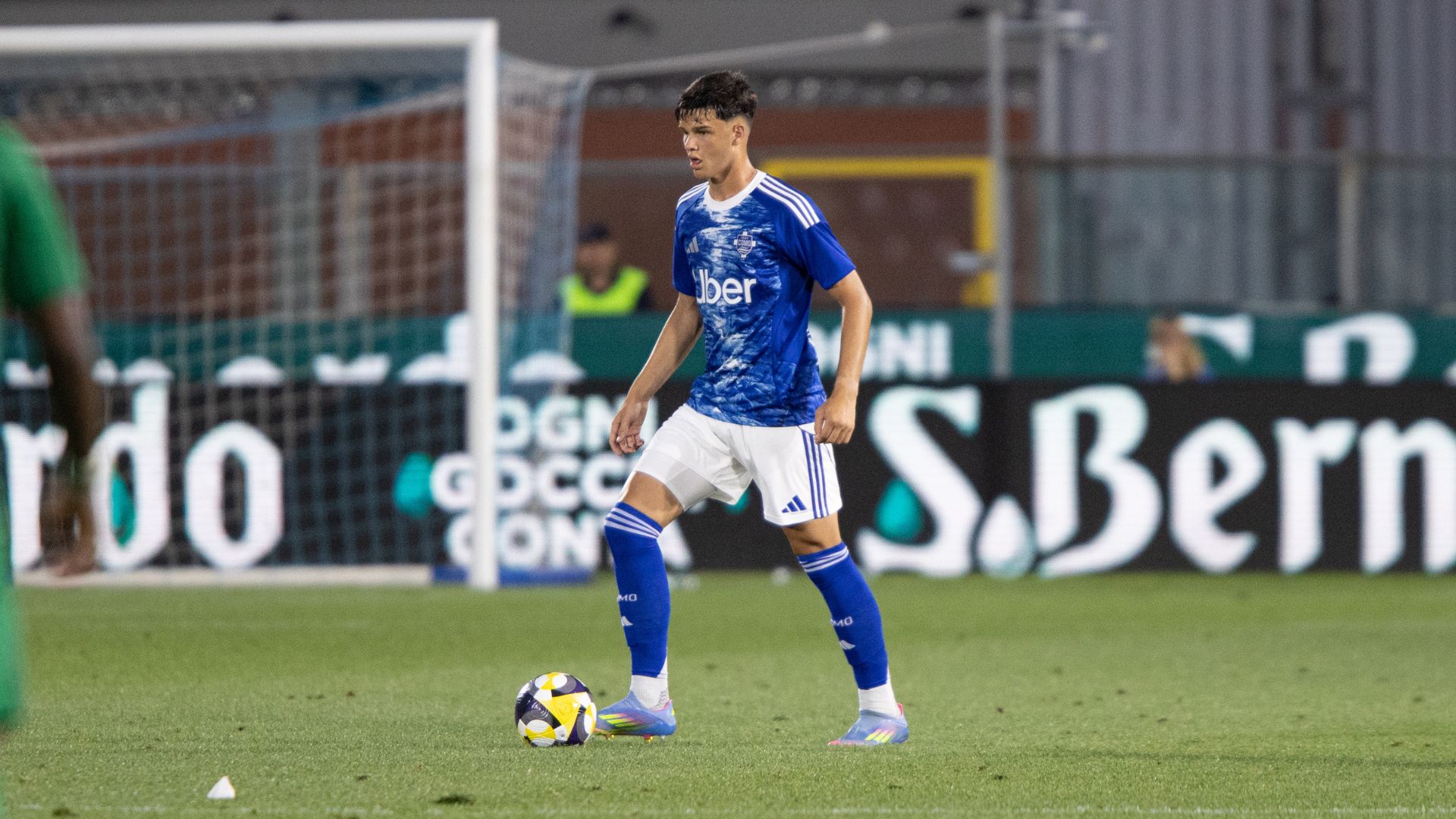
Ivan Smolčić picked up the MVP award today in Como 1907’s 0-0 draw against second placed Napoli.

The Lariani recorded their 17th clean sheet of the season in reaching the top of the league standings for shutouts.

UFC fighter Paddy Pimblett, British actor and musician Damian Lewis, and former Super Bowl champion Beau Allen were all in attendance at a sold-out Sinigaglia.

Calendar

Hellas Verona – Como 1907
May 10
MEN
12:30 (CEST)
VS
Como 1907 – Parma
May 17
MEN
15:00 (CEST)
VS
Cremonese – Como 1907
May 24
MEN
15:00 (CEST)
VS